



Search
17 results for "cathodic"
Insights · 17
3D LiDAR Scanning + Cathodic Protection: Find the 'Symptom' Before Failure, Stop the 'Cause' at the Rebar
Why modern structural inspection pairs two things: 3D LiDAR scanning that measures settlement, cracking and spalling down to millimeter level, then Cathodic Protection that stops the rebar corrosion that is the real cause. The scan → diagnose → protect → monitor lifecycle for bridges, buildings and railways — with the realistic accuracy (cm/mm) achievable, no overclaiming.
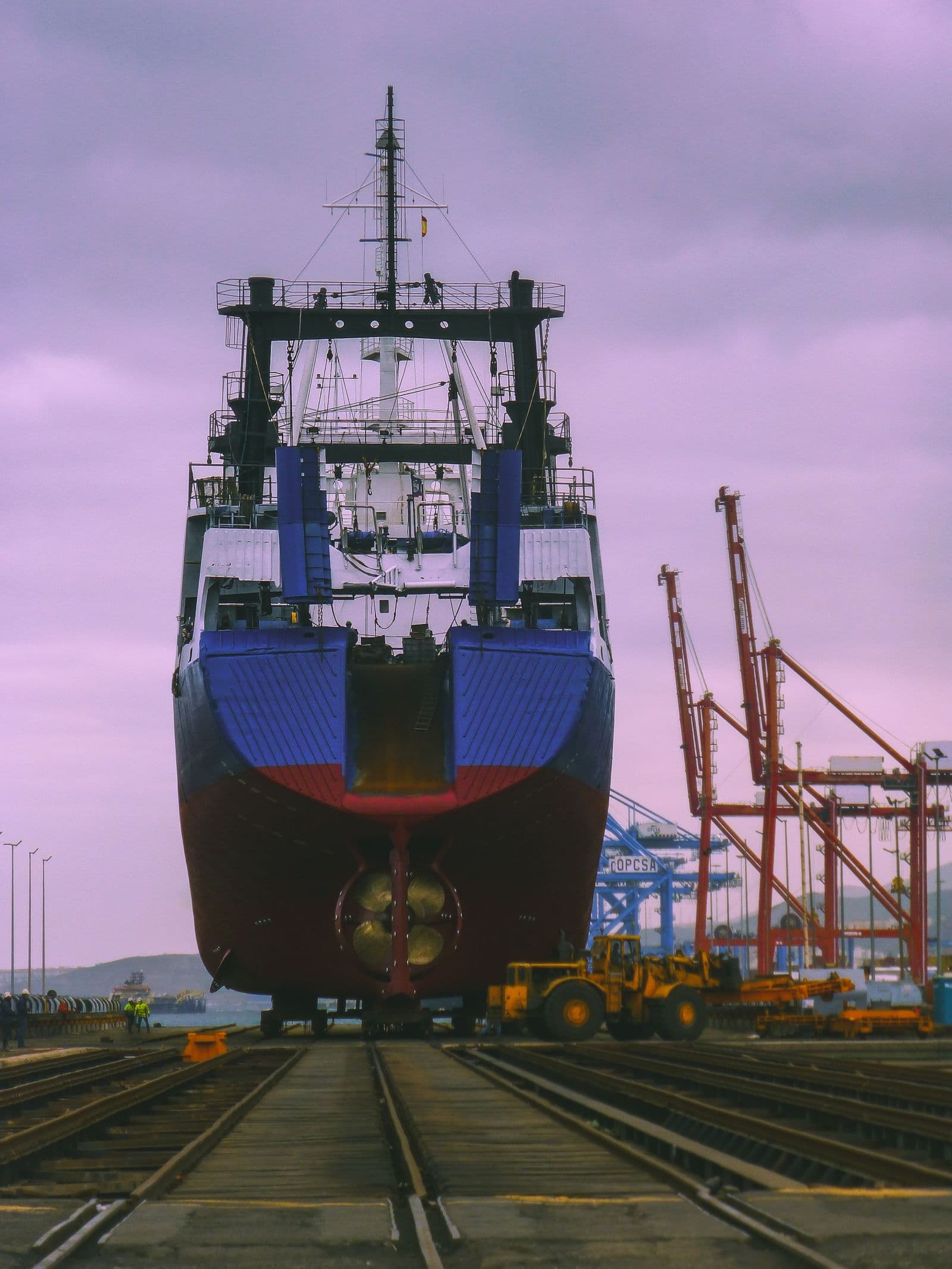
Marine & Shipyard Corrosion Protection Field Guide — Choose the Whole System: Surface Prep (Sa 2.5) · ISO 12944 C5-M/CX/Im2 Paint Systems · Cathodic Protection (Anode/ICCP) · Safe Hot Work + How to Lock In Project Material Pricing
Field guide for shipyard, jetty, and coastal steel-structure maintenance: plan corrosion protection across the whole asset by zone (atmospheric/splash/immersed/buried) — abrasive blast Sa 2.5 per ISO 8501, select an ISO 12944 paint system for C5-M/CX and immersed Im2, design cathodic protection with sacrificial anodes (zinc/aluminium/magnesium) vs ICCP per DNV-RP-B401/ISO 12696, control hot work in confined spaces per NFPA 51B, and lubricate marine machinery — plus how to standardize materials to lock project pricing and delivery.
ICCP vs Sacrificial Anode — Choosing a Cathodic Protection System per NACE SP0169 / ISO 15589 in Thailand
Comparing two cathodic-protection methods: Sacrificial Anode (galvanic) vs Impressed Current (ICCP) — principles, anodes (Zn/Al/Mg vs MMO/Ti), the -850 mV criterion, standards NACE SP0169 / ISO 15589 / ISO 12696, and selection by structure size and environment in Thailand.
Cathodic Protection for Cooling Towers in Factories + Data Centers — Choosing Among 4 Anode Types and a TOR Guide
Cathodic protection for cooling towers, steel + concrete structures — comparing zinc, aluminium, magnesium anode + ICCP for circulating water in chiller plants and water-cooled data centers — NACE SP0388, ISO 12696 standards with a TOR template.
4 Sacrificial Anode Types — Concrete vs Aluminium vs Zinc vs Magnesium for Cathodic Protection
Field guide to selecting sacrificial anodes for Galvanic Cathodic Protection — Concrete Anode (standard/high-output) for reinforced concrete, Aluminium (Al-Zn-In) for marine seawater, Zinc 99.995% for ship hulls, Magnesium for fresh water. Standards: TIS 3029-2563, TIS 3359-2565, ASTM B418, ISO 12696, NACE SP0387, DNV-RP-B401.
Cathodic Protection for Steel Structures: A Practical Guide for Thai Industrial Facilities
Complete guide to cathodic protection systems for engineers and procurement officers in Thailand. Covers galvanic vs ICCP systems, anode material selection (Zinc/Magnesium/Aluminum), NACE SP0169 standards, and current density calculations.
Galvanic Cathodic Protection for Steel Rebar in Concrete — ASTM B418, TIS 3029, ISO 12696
How Galvanic Cathodic Protection (GCP) embeds zinc anodes in concrete to protect rebar from corrosion under ASTM B418, TIS 3029-2563, and ISO 12696 — with practical guidance for Thai infrastructure projects.
Designing a Galvanic Cathodic Protection System — Current Demand, Anode Mass & Anode Count (DNV-RP-B401 / ISO 12696)
A step-by-step guide to sizing a sacrificial-anode corrosion protection system — current density by environment, the anode mass formula (M = I·t·8760 / u·ε), anode count from current output, and the −850 mV / 100 mV decay criteria, with a worked example. References DNV-RP-B401, ISO 12696, NACE SP0169 / ISO 15589, ASTM B418.
Zinc Anode / Cathodic Protection in Thailand — How anode pricing works and how to compare it without getting caught out
How zinc, magnesium and aluminium anode pricing works in Thailand, how to compare quotations in baht per A·h, the capacities the manufacturer publishes, ASTM B418 and ISO 12696, and how to request a quotation.
Industrial Cold Room / Cold Storage: Chiller vs Freezer vs Blast Freezer + Refrigerant Selection + Cooling Load Calculation + EN 378/GDP Standards for Thai Food, Pharma & Logistics Plants
Buyer's guide to industrial cold storage: separate chiller (+2 to +8°C) / freezer (−18 to −25°C) / blast freezer → calculate real cooling load before sizing → compare refrigerants R-449A/R-448A/R-290/R-744/NH3 → choose PIR panel thickness → contractor checklist + EN 378/ISO 5149/GDP/HACCP standards for plants in Thailand.
Carbonation vs Chloride — The Two Root Causes of Rebar Corrosion, and How to Match the Right Protection
Rebar in concrete corrodes by two fundamentally different mechanisms: carbonation (pH drop, uniform corrosion) and chloride attack (localized pitting). How to tell them apart with phenolphthalein + chloride profiling, EN 206 exposure classes, the Tuutti model, and how to match protection (cover, CP anodes, coatings) to the actual cause.
Paint + Coating for Stainless Steel in Food / Pharma Plants — FDA 21 CFR + ISO 22196 + TIS spec
Choosing paint and specialty coating for stainless steel structures in food and pharmaceutical plants per FDA 21 CFR 175.300, ISO 22196 antimicrobial, TIS (มอก.), and HACCP / GMP — comparing epoxy phenolic, food-grade polyurethane, acrylic-silicate antimicrobial concrete sealer
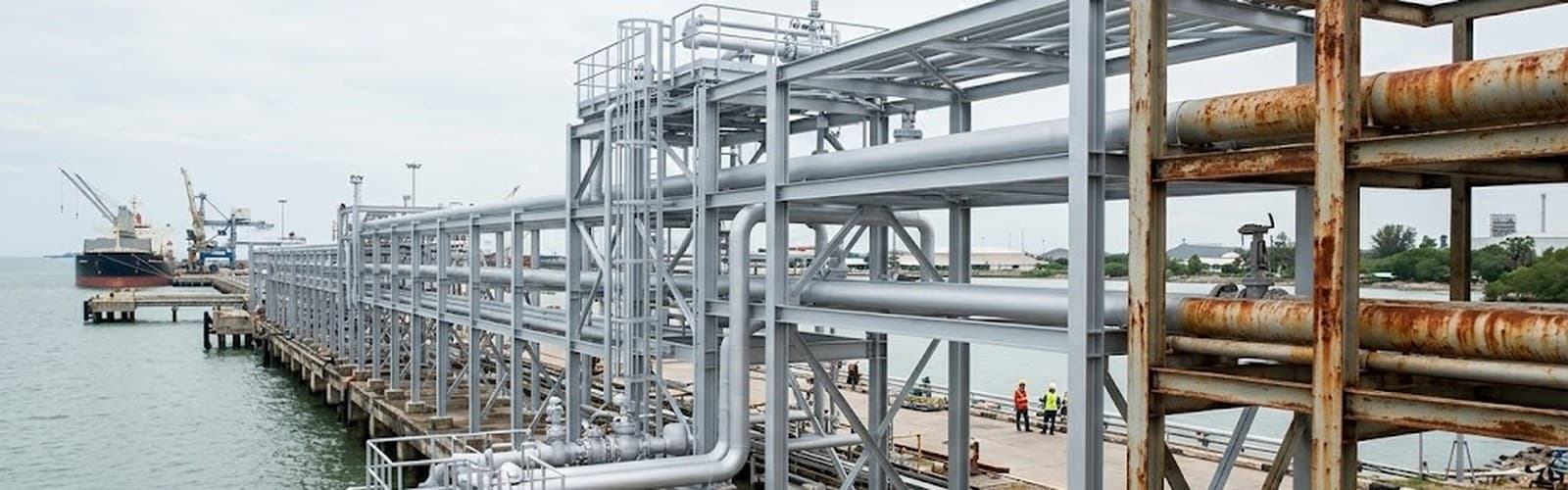
Selecting Zinc Anodes for Marine Structures in Thailand — An Engineer's Guide
Practical guide to anode material selection for cathodic protection of marine jetty piles, steel structures, and subsea pipelines in Thai waters. Covers Zinc vs Aluminum vs Magnesium, anode sizing calculations, and DNV/ISO standards.
Why the Cheapest Corrosion Protection Today Is Often the Most Expensive Over 20 Years — Think in Life-Cycle Cost (LCC)
A guide to costing corrosion-protection work as Life-Cycle Cost (LCC/TCO) per ISO 15686-5 + ISO 12944 — why the lowest sticker price is rarely the lowest total cost, the hidden costs (repaint cycles + downtime), and how to compare options on Equivalent Annual Cost for factory, port, and government work in Thailand.
Food & Beverage and Cold-Chain Factory Fit-Out and Maintenance Field Guide — Select Refrigeration/Refrigerants to ASHRAE 15/EN 378/ISO 5149 · Hot-Washdown PU-Cement Floors · Food/Pharma Corrosion Coatings · Boiler-Cooling-RO Water · ISO 8573 Food-Contact Air + How to Lock In Material Pricing
Field guide for food & beverage and cold-storage plant owners and engineering/maintenance teams: plan the whole factory with food safety governing every choice — select the refrigeration system/refrigerant by temperature band and refrigerant safety per ASHRAE 15/EN 378/ISO 5149, handle ultra-low/freeze-dry and retrofit of legacy R-13B1, lay PU-cement floors that survive hot-water washdown and food acids in wet zones, coat walls/tanks to food/pharma grade, control process water (boiler/cooling/RO/CIP) and cooling-tower legionella, and control food-contact compressed-air quality to ISO 8573 — plus how to standardize materials to lock pricing and delivery for the whole plant.
Industrial Cooling Tower Selection + Water Treatment: Types, Range/Approach, and Scaling/Corrosion/Legionella Control per CTI/ASHRAE 188 for Thai Plants
Buyer's guide to industrial cooling towers: compare open-circuit vs closed-circuit, counterflow vs crossflow, induced-draft vs forced-draft → calculate Range/Approach → water treatment for Scaling/LSI, Corrosion, Biofouling, and Legionella per CTI ATC-105 and ASHRAE Standard 188 for plants in Thailand.
Corrosion-Resistant Rebar — Epoxy (A775) vs Galvanized (A767) vs Stainless (A955): Choosing for Budget and Service Life
Comparing three corrosion-resistant rebar systems: epoxy-coated (ASTM A775/A934), hot-dip galvanized (A767), and stainless (A955) — protection mechanism, chloride threshold, cost relative to black bar, installation cautions, and a decision tree to choose by exposure + design life for Thai coastal projects.