
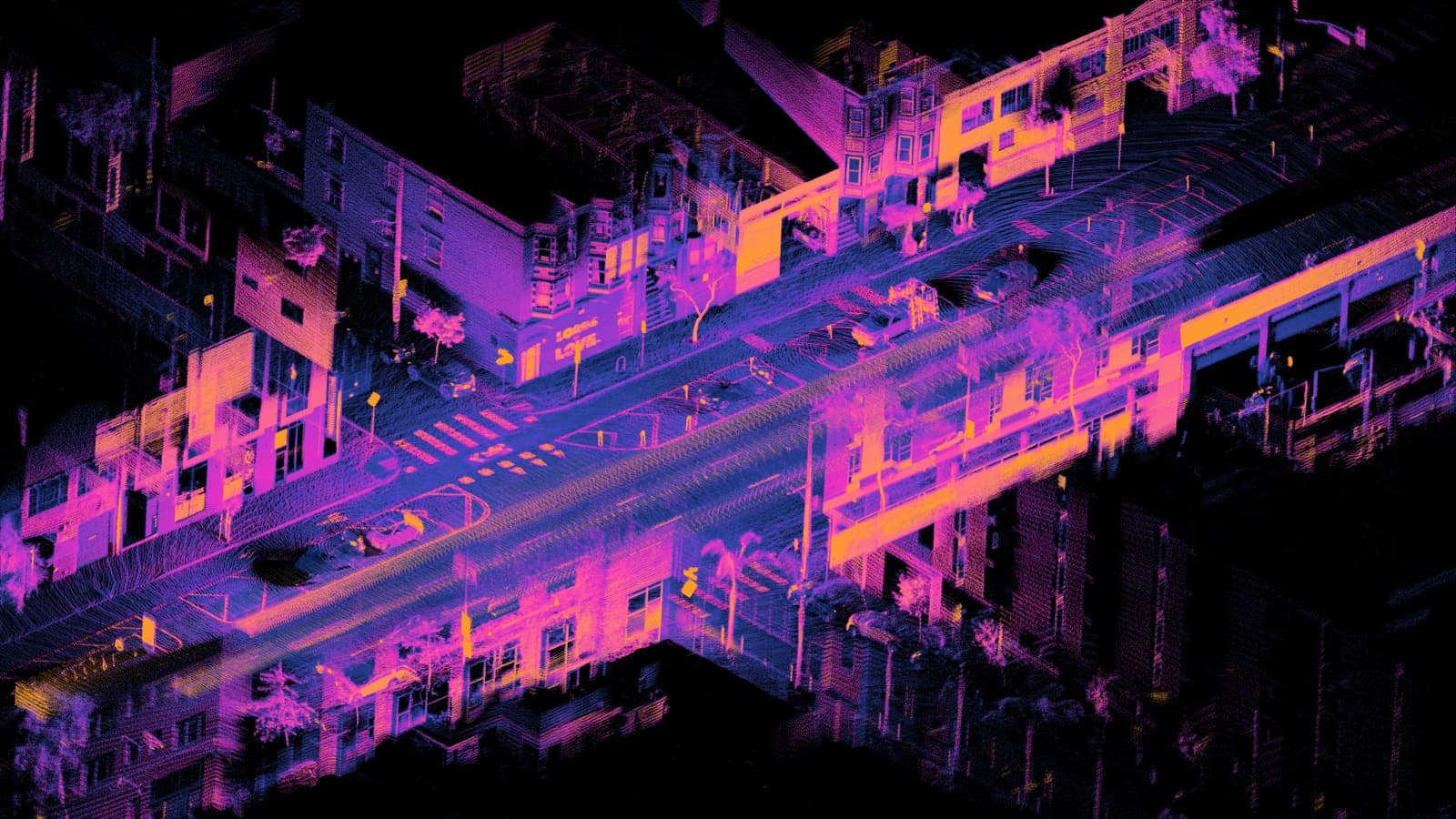
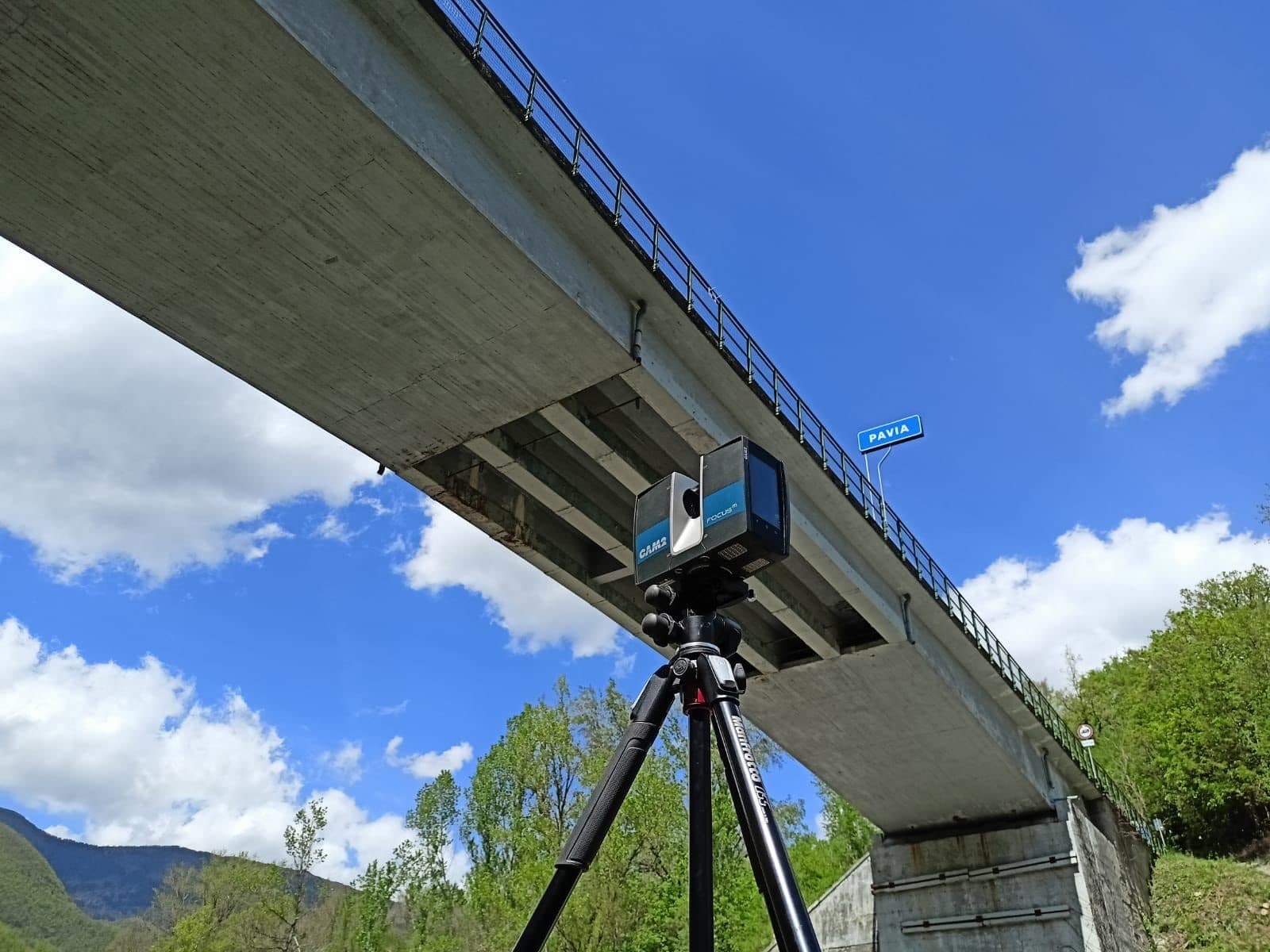
LiDAR finds a structure's 'symptoms' (settlement, cracks, spalling, corroded steel) from centimeter to millimeter level — but the real cause is chloride-induced rebar corrosion, and Cathodic Protection is the proven way to stop it. Doing both closes the full asset lifecycle: scan → diagnose → protect → monitor.
Thailand's infrastructure — bridges, elevated roads, tunnels and railways — is entering an age where serious inspection matters. The problem is that most damage begins inside and is invisible to the naked eye until it is too late. This article explains how 3D LiDAR scanning and Cathodic Protection work together to close the full asset lifecycle, structured as problem → cause → result → method.
Problem: Finding out late means runaway damage
Owners and the engineers who maintain structures fear the same thing — a structure that is settling, tilting, cracking or deteriorating while visual inspection still shows nothing. By the time a surface crack or spalling appears, internal corrosion has often been progressing for years. The consequences are safety risk, legal liability, and ballooning repair budgets — repairing after damage typically costs several times more than preventing it in advance.
Cause: the visible surface is only the end symptom
The engineering cause of deterioration in most reinforced-concrete structures is rebar corrosion, especially the chloride-induced kind that attacks from inside the concrete. As steel rusts, the corrosion product expands and pushes the concrete to crack and spall. Combined with foundation factors such as differential settlement and water scour, this makes the "symptom" appear at the surface while the "cause" has been working from within.
Result: know in advance, plan precisely, spend less
Pairing these two workstreams delivers clear results:
- Numbers, not just impressions — a Deformation Survey gives settlement, tilt and deflection as millimeter-level figures, comparable across survey epochs.
- Targeted repair/strengthening instead of full demolition, cutting cost and downtime.
- Fewer disputes and variation claims — right-of-way (ROW) survey and as-built vs as-designed comparison capture complete data, reducing out-of-scope contractor claims.
- Deterioration stopped at the cause — once rebar corrosion is arrested, the structure's service life extends significantly.
Method: the scan → diagnose → protect → monitor lifecycle
1) Scan. LiDAR builds a 3D point cloud of the structure and terrain — by drone, mobile (MLS) or terrestrial (TLS) depending on the job — used for Digital Terrain Models (DTM), earthwork volumes, right-of-way survey, Scan-to-BIM, and railway clearance checks.
2) Diagnose. Compare the scan against the design or against prior surveys to catch differential settlement, pier tilt, beam deflection, cracks and concrete spalling (from a few millimeters), and to assess steel section lost to corrosion.
3) Protect. Once the cause is confirmed as rebar corrosion, a Cathodic Protection system (galvanic anodes or ICCP) to ISO 12696 stops it — alongside targeted repair/strengthening.
4) Monitor. Re-scan periodically to confirm the movement has stopped and the protection is working — shifting structural care from "repair when it fails" to "proactive monitoring".
Realistic accuracy (no overclaiming)
| Job | Tool | Appropriate accuracy |
|---|---|---|
| Topography / right-of-way / earthwork | Drone · Mobile (MLS) | Centimeter grade (survey-grade ~1–3 cm with GCP + RTK/PPK) |
| Scan-to-BIM / as-built | Terrestrial (TLS) | Centimeter–millimeter, per USIBD LOA |
| Deformation / settlement monitoring | Terrestrial (TLS) premium | Millimeter grade (~±1–3 mm), sensor-dependent |
The true differentiator is doing the scan and the corrosion protection under one roof — most scan providers hand over a point cloud or model and stop, with no part that stops the cause of deterioration. Closing all four stages delivers far more value to the asset owner.
Need to scope a 3D scan or a structural deformation survey? Send your job scope and area/route and our specialist team will assess and quote — with the option to extend into corrosion protection.
Get this guide as a reference brief (PDF)
Summary + full section list + standards cited, Saha-branded for your memo/RFQ — emailed to you too.
Questions after reading? Talk to our engineers
Tell us what you need — our engineers help you spec it right, with a real quote. No charge.
Need help with this in your facility?
Our team handles full procurement and installation for the topics covered in this article. Free quote promptly during business hours.
Another line of ours — spreadsheet tools for SMEs
Job Costing & Pricing Calculator (Thai + English editions)
For work sold as jobs — enter materials, on-site hours and freight, and get the cash floor, the break-even, and the price you should quote.
Frequently Asked Questions
1Does 3D LiDAR scanning really achieve millimeter accuracy?
+
2If scanning already finds cracks and spalling, why do Cathodic Protection too?
+
3For railway work, does LiDAR require long line closures?
+
Related content
Corrosion-Resistant Rebar — Epoxy (A775) vs Galvanized (A767) vs Stainless (A955): Choosing for Budget and Service Life
Comparing three corrosion-resistant rebar systems: epoxy-coated (ASTM A775/A934), hot-dip galvanized (A767), and stainless (A955) — protection mechanism, chloride threshold, cost relative to black bar, installation cautions, and a decision tree to choose by exposure + design life for Thai coastal projects.
Carbonation vs Chloride — The Two Root Causes of Rebar Corrosion, and How to Match the Right Protection
Rebar in concrete corrodes by two fundamentally different mechanisms: carbonation (pH drop, uniform corrosion) and chloride attack (localized pitting). How to tell them apart with phenolphthalein + chloride profiling, EN 206 exposure classes, the Tuutti model, and how to match protection (cover, CP anodes, coatings) to the actual cause.
4 Sacrificial Anode Types — Concrete vs Aluminium vs Zinc vs Magnesium for Cathodic Protection
Field guide to selecting sacrificial anodes for Galvanic Cathodic Protection — Concrete Anode (standard/high-output) for reinforced concrete, Aluminium (Al-Zn-In) for marine seawater, Zinc 99.995% for ship hulls, Magnesium for fresh water. Standards: TIS 3029-2563, TIS 3359-2565, ASTM B418, ISO 12696, NACE SP0387, DNV-RP-B401.
Galvanic Cathodic Protection for Steel Rebar in Concrete — ASTM B418, TIS 3029, ISO 12696
How Galvanic Cathodic Protection (GCP) embeds zinc anodes in concrete to protect rebar from corrosion under ASTM B418, TIS 3029-2563, and ISO 12696 — with practical guidance for Thai infrastructure projects.