
Practical guide to anode material selection for cathodic protection of marine jetty piles, steel structures, and subsea pipelines in Thai waters. Covers Zinc vs Aluminum vs Magnesium, anode sizing calculations, and DNV/ISO standards.
Steel Structures in Thai Waters Corrode Faster Than the Manual Assumes
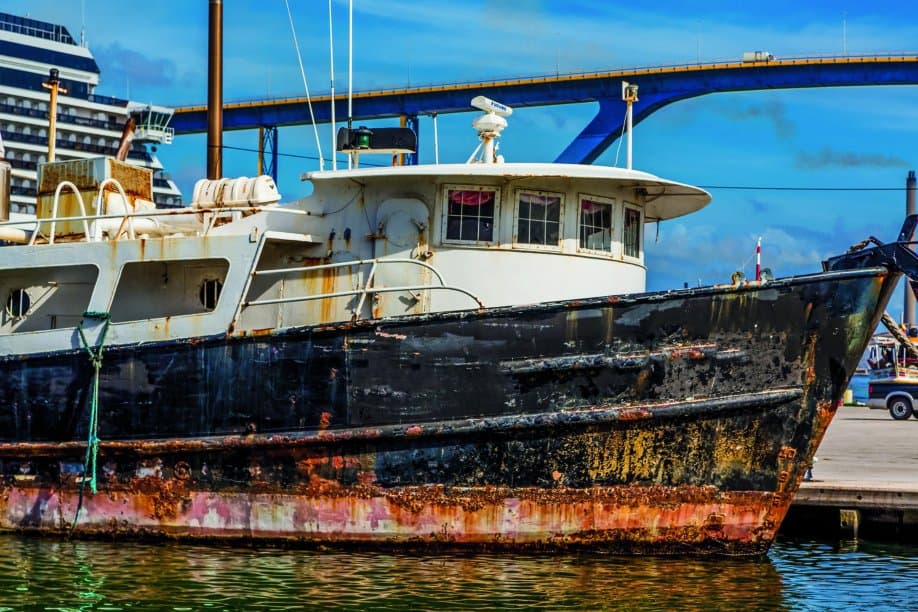
The Gulf of Thailand maintains water temperatures of 28–32°C year-round — 10–15°C warmer than North Sea conditions. Steel corrosion rates in these tropical waters run 0.1–0.3 mm/year, roughly 2–3× the rate seen in cold-water environments.
Steel piles and jetty structures without cathodic protection typically begin showing serious deterioration within 5–8 years — well short of the 20–30 year design life.
How Cathodic Protection Works in Seawater
In seawater, steel behaves as a natural anode (corrodes). Cathodic protection reverses this by connecting a more electrochemically active material that sacrifices itself preferentially, making the steel structure a cathode.
Protection criteria (ISO 12473 / DNV-RP-B401):
- Potential ≤ −850 mV vs Cu/CuSO₄ reference electrode
- Or ≤ −800 mV vs Ag/AgCl/seawater in marine environments
Anode Material Selection: Zinc vs Aluminum vs Magnesium
| Material | Driving Potential (vs Ag/AgCl) | Capacity (Ah/kg) | Relative Cost | Best For |
|---|---|---|---|---|
| Zinc | −1,050 mV | 780 | ฿ | General seawater, widest use |
| Aluminum | −1,073 mV (vs Ag/AgCl) | 2,481 | ฿฿ | Seawater and brackish water, highest capacity |
| Magnesium (condenser anode) | closed-circuit 1.57–1.62 V (vs SCE) | ≥ 1,100 | ฿฿ | Fresh and very brackish water, condensers — not for seawater, and not for soil (out of scope) |
Material Selection for Thai Structures
Gulf of Thailand / Andaman Sea:
- Use Zinc or Aluminum — both provide sufficient driving potential in full-salinity seawater
- Aluminum offers 3.5× higher capacity per kg → fewer anodes or longer design life
- Zinc: specify ASTM B418 Type I (naval brass core) or Type II (mild steel core)
Brackish water at river mouths (e.g. Chao Phraya, Bangkok Port area):
- Zinc or Aluminum remain viable, but efficiency drops when salinity falls below 1%
- Measure the water first — fresh or very brackish water points to magnesium, seawater to zinc or aluminium
Never use Magnesium in seawater — the high driving potential produces excessive current density and risks hydrogen embrittlement in high-strength steel components.
Anode Sizing Calculation (DNV-RP-B401 Method)
🧮 No need to work it by hand — the Anode Sizing Calculator runs this same method and also checks the end-of-life current condition that is easy to forget.
Basic formula:
Number of anodes = (Surface area × Current density) / (Anode capacity × Utilization factor)
Reference current densities for Gulf of Thailand:
- Open seawater (submerged): 30–50 mA/m²
- Tidal / splash zone: 50–80 mA/m² (elevated oxygen)
- Buried in coastal mud: 15–25 mA/m²
Worked example: River jetty steel pile
- Round pile, 400 mm diameter, 8 m submerged length
- Surface area = π × 0.4 × 8 = 10.05 m²
- Current density = 40 mA/m² (Gulf of Thailand average)
- Required current = 10.05 × 0.040 = 0.40 A
- Using a 5 kg Zinc anode (780 Ah/kg, utilization 0.85): → Anode capacity = 5 × 780 × 0.85 = 3,315 Ah → Design life = 3,315 / (0.40 × 8,760 hr/yr) ≈ 0.94 years → insufficient; upsize or add anodes
For a 10-year design life, approximately 10 kg of Zinc anode per pile is required, or multiple smaller anodes distributed along the pile.
Correct Anode Placement
Jetty / pier piles:
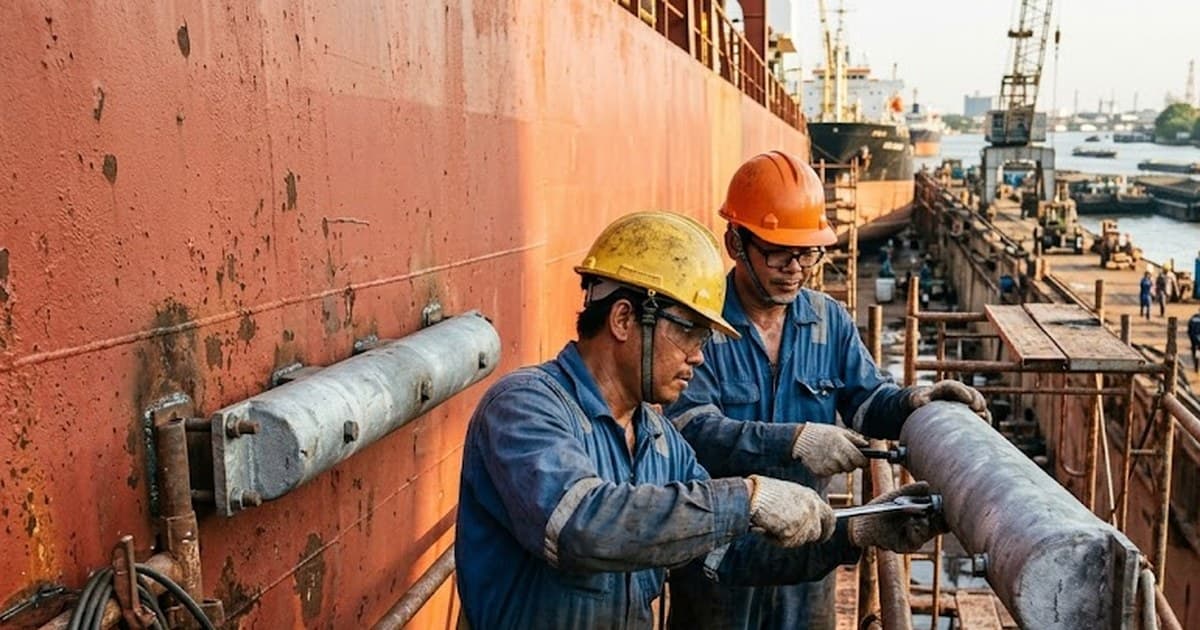
- Space anodes every 1–2 m along the submerged section
- Increase density at the splash zone (inter-tidal zone) — highest corrosion rates occur here
- Inspect potential every 6–12 months using a reference electrode
Subsea pipelines:
- Install bracelet anodes every 30–50 m
- Add extra anodes near field joints where coating may be defective
- For pipelines exceeding 1 km, consider impressed current cathodic protection (ICCP)
Indicators That Anodes Need Replacement
- Anode has consumed more than 50% of its original mass → replace
- Measured potential more positive than −750 mV (underprotection)
- Rust spots appearing on the structure despite anode presence → check anode connections and placement
Consult our cathodic protection engineering team: +66 2-096-2118 | +66 83-494-6958 Sahawatthanakit (1988) Co., Ltd. — Nonthaburi, Thailand Request a Corrosion Protection Quote →
Get this guide as a reference brief (PDF)
Summary + full section list + standards cited, Saha-branded for your memo/RFQ — emailed to you too.
Questions after reading? Talk to our engineers
Tell us what you need — our engineers help you spec it right, with a real quote. No charge.
Need help with this in your facility?
Our team handles full procurement and installation for the topics covered in this article. Free quote promptly during business hours.
Another line of ours — spreadsheet tools for SMEs
Quote Register + Win Rate (Thai + English editions)
For quotes that go silent — one row per quote, telling you which to chase today and what your real win rate is.
Comparison tables related to this article
Related content
Marine & Shipyard Corrosion Protection Field Guide — Choose the Whole System: Surface Prep (Sa 2.5) · ISO 12944 C5-M/CX/Im2 Paint Systems · Cathodic Protection (Anode/ICCP) · Safe Hot Work + How to Lock In Project Material Pricing
Field guide for shipyard, jetty, and coastal steel-structure maintenance: plan corrosion protection across the whole asset by zone (atmospheric/splash/immersed/buried) — abrasive blast Sa 2.5 per ISO 8501, select an ISO 12944 paint system for C5-M/CX and immersed Im2, design cathodic protection with sacrificial anodes (zinc/aluminium/magnesium) vs ICCP per DNV-RP-B401/ISO 12696, control hot work in confined spaces per NFPA 51B, and lubricate marine machinery — plus how to standardize materials to lock project pricing and delivery.
Carbonation vs Chloride — The Two Root Causes of Rebar Corrosion, and How to Match the Right Protection
Rebar in concrete corrodes by two fundamentally different mechanisms: carbonation (pH drop, uniform corrosion) and chloride attack (localized pitting). How to tell them apart with phenolphthalein + chloride profiling, EN 206 exposure classes, the Tuutti model, and how to match protection (cover, CP anodes, coatings) to the actual cause.
Zinc Anode / Cathodic Protection in Thailand — How anode pricing works and how to compare it without getting caught out
How zinc, magnesium and aluminium anode pricing works in Thailand, how to compare quotations in baht per A·h, the capacities the manufacturer publishes, ASTM B418 and ISO 12696, and how to request a quotation.
Cathodic Protection for Steel Structures: A Practical Guide for Thai Industrial Facilities
Complete guide to cathodic protection systems for engineers and procurement officers in Thailand. Covers galvanic vs ICCP systems, anode material selection (Zinc/Magnesium/Aluminum), NACE SP0169 standards, and current density calculations.