
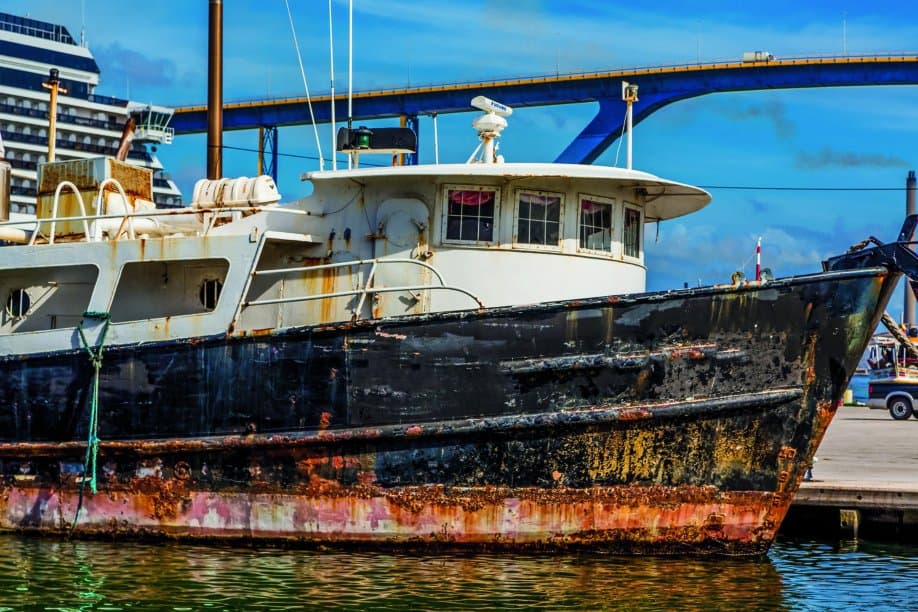

A tight budget is no reason to skip corrosion protection. Comparing the standard line (TIS 3029-2563 / ISO 12696) with the NOVA GalvaTect and NOVA Paints budget line — real prices and a 4-question decision framework.
Many rust-repair jobs in Thailand fail not because someone picked the wrong technology, but because the budget ran out and nothing got done at all — reinforced-concrete structures with corroding rebar sit untreated because the full-spec protection quote exceeded the project budget.
In 2026 there is a proper answer for that situation: the NOVA budget line (NOVA GalvaTect for concrete anodes, NOVA Paints for coatings) — the same working principles as the standard line at roughly 35-40% lower cost per point. This article covers what actually differs, what doesn't, and a 4-question framework you can apply immediately.
What the two lines are — and why they don't compete with each other
The standard line (core products) is what project and government work references at full spec:
- CR-series concrete anodes — zinc sacrificial anodes embedded in reinforced concrete, made in Thailand to TIS 3029-2563, with system design per ISO 12696:2022. Stops corrosion at the source instead of repeated patch repairs (volume-based pricing — state your quantity for a quote).
- SGP-001 — one-part moisture-curing polyurethane anti-rust coating; open the can and paint, no mixing. From ฿545.
- SGU-201 — two-part epoxy that applies to wet and underwater surfaces directly; repair piles, piers, and submerged structures without dewatering. From ฿2,740.
- SGL-301 — industrial photoluminescent paint for fire-exit signage and escape routes. ฿2,500/kg.
The NOVA budget line serves general repair work and budget-controlled projects — same principles, more accessible packaging and pricing:
| NOVA product | What it does | Starting price (ex-VAT) |
|---|---|---|
| GalvaTect T20 / T60 / T100 / T160 | Eco concrete-embedded anodes protecting rebar | ฿315 / 780 / 895 / 1,075 per unit |
| Rust Shield | Anti-rust coating for steel/concrete, no blasting required | from ฿360 |
| Aqua Shield | Anti-rust coating for very wet / underwater repair work | from ฿1,075 |
| NOVA-Cool | Industrial heat-reflective paint (metal-sheet roofs, warehouse walls, tanks) | ฿625/litre |
| Solar Coat Formula 2 | Anti-dust coating for solar panels, fewer cleaning cycles | ฿1,990/litre |
The key point: NOVA is not a low-grade substitute for the standard line. It is a parallel line that strips out costs small jobs don't need (such as full project-spec documentation), turning repairs that used to be "too expensive, so skipped" into work that actually starts.
The 4-question decision framework
1. Does the job need to reference a spec? Government work, consultant-controlled specs, or a TOR citing TIS/ISO → standard line (CR-series maps directly to TIS 3029-2563). In-house factory repairs with no mandated spec → NOVA, start today.
2. How severe is the environment (ISO 12944)? C5/Im conditions (coastal, chemical plants, permanently submerged structures) call for full-spec systems — e.g. SGU-201 for permanent underwater service. For C3-C4 (general factories, warehouses, urban), NOVA Rust Shield / Aqua Shield covers most maintenance repair work.
3. How big is the job and how many points? Anode work with many embedment points on a controlled budget — GalvaTect T-series keeps per-point cost real (T60 at ฿780/unit). Small sections and spot repairs start at T20, ฿315 — hundreds of baht, not tens of thousands.
4. Who does the painting? Both Rust Shield and Aqua Shield are designed to be applied without abrasive blasting — a factory's own maintenance team can do it, cutting the single largest cost block of steel painting. The manufacturer states a service life 2-3× longer than ordinary anti-rust paints.
Matching real jobs
- Concrete parking structure cracking from rebar rust (tight budget): embed GalvaTect T20-T60 at risk points — start in the low thousands instead of waiting for a major break-out repair.
- Private jetty piles, permanently wet: small repairs with Aqua Shield / project work needing 400 μm film build and full spec with SGU-201.
- Factory roof overheating, aircon bills climbing: NOVA-Cool at ฿625/litre — manufacturer-stated 5-10°C surface reduction.
- Solar farm / rooftop losing output to dust: Solar Coat Formula 2 at ฿1,990/litre, clearly below the Thai market midpoint (~฿3,000/litre).
- Bridges / government structures with a TIS-citing TOR: standard-line CR-series with ISO 12696 system design and full documentation.
Bottom line
If your job carries a mandated spec or sits in a severe environment, the standard line is the correct answer — and we design the system to standard, with the paperwork. If your job is maintenance that can't wait but the budget is tight, the NOVA line gets protection started today for hundreds to a few thousand baht — always cheaper than letting the structure fail and paying for the big repair.
Not sure which line fits your job? Send site photos + area size via LINE @sahawatt1988 — our engineering team will assess and prepare a quotation free of charge, promptly during business hours.
Get this guide as a reference brief (PDF)
Summary + full section list + standards cited, Saha-branded for your memo/RFQ — emailed to you too.
Questions after reading? Talk to our engineers
Tell us what you need — our engineers help you spec it right, with a real quote. No charge.
Need help with this in your facility?
Our team handles full procurement and installation for the topics covered in this article. Free quote promptly during business hours.
Another line of ours — spreadsheet tools for SMEs
Quote Register + Win Rate (Thai + English editions)
For quotes that go silent — one row per quote, telling you which to chase today and what your real win rate is.
Frequently Asked Questions
1How is the NOVA line different from the standard line?
+
2How much do NOVA GalvaTect eco concrete anodes cost?
+
3Is there a budget coating that can be applied underwater?
+
4How much does NOVA-Cool heat-reflective paint actually reduce temperature?
+
5On a very tight budget, where should rust protection start?
+
6How do I order, and is there a minimum?
+
Comparison tables related to this article
Related content
Galvanic Cathodic Protection for Steel Rebar in Concrete — ASTM B418, TIS 3029, ISO 12696
How Galvanic Cathodic Protection (GCP) embeds zinc anodes in concrete to protect rebar from corrosion under ASTM B418, TIS 3029-2563, and ISO 12696 — with practical guidance for Thai infrastructure projects.
Cathodic Protection for Cooling Towers in Factories + Data Centers — Choosing Among 4 Anode Types and a TOR Guide
Cathodic protection for cooling towers, steel + concrete structures — comparing zinc, aluminium, magnesium anode + ICCP for circulating water in chiller plants and water-cooled data centers — NACE SP0388, ISO 12696 standards with a TOR template.
Zinc Anode / Cathodic Protection in Thailand — How anode pricing works and how to compare it without getting caught out
How zinc, magnesium and aluminium anode pricing works in Thailand, how to compare quotations in baht per A·h, the capacities the manufacturer publishes, ASTM B418 and ISO 12696, and how to request a quotation.
Corrosion-Resistant Rebar — Epoxy (A775) vs Galvanized (A767) vs Stainless (A955): Choosing for Budget and Service Life
Comparing three corrosion-resistant rebar systems: epoxy-coated (ASTM A775/A934), hot-dip galvanized (A767), and stainless (A955) — protection mechanism, chloride threshold, cost relative to black bar, installation cautions, and a decision tree to choose by exposure + design life for Thai coastal projects.