Specialized Paint & Coatings
4 innovation coatings — Thai-made, internationally certified
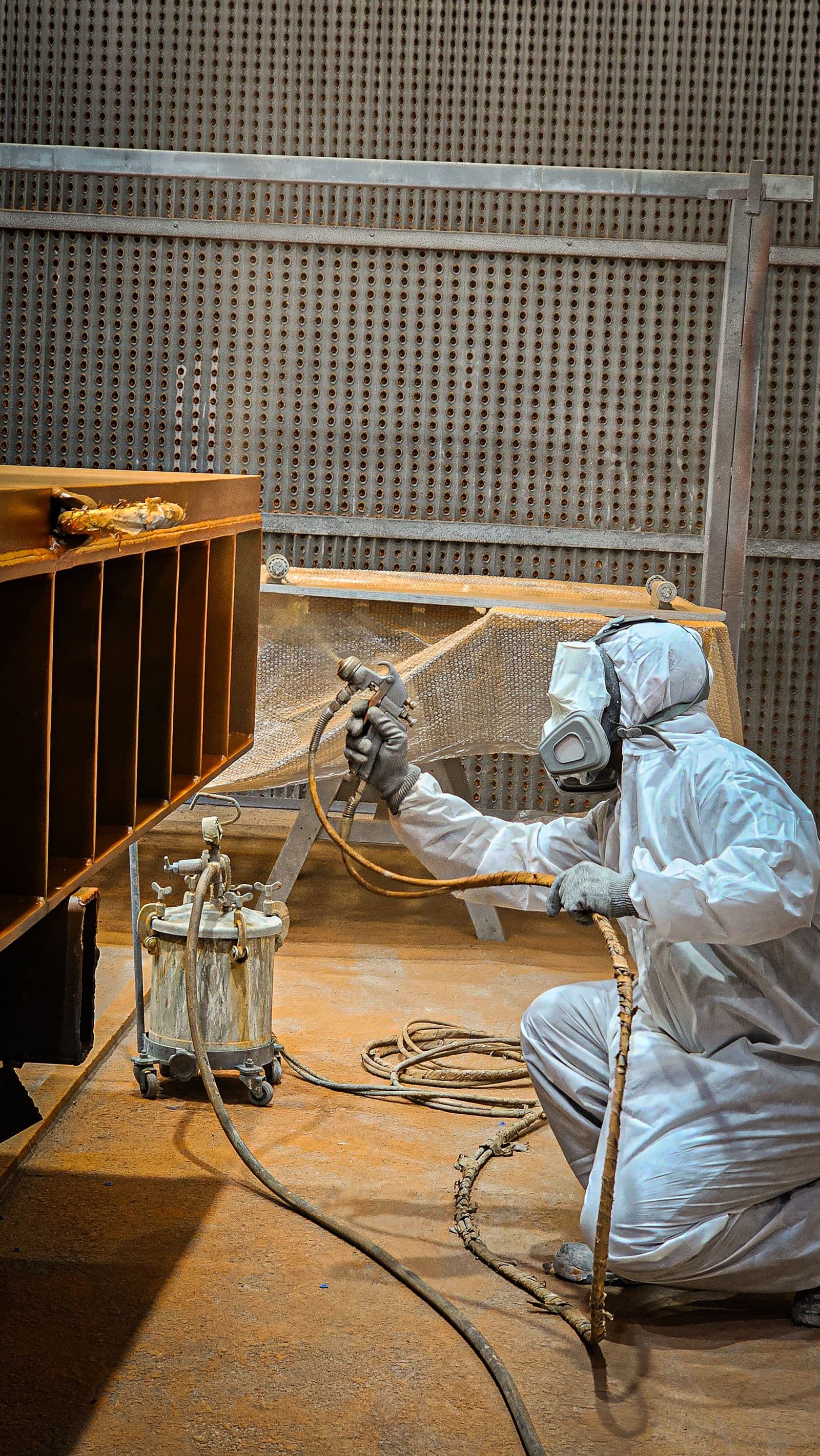
Sahawatthanakit (1988) manufactures and supplies industrial paints and anti-corrosion coatings — 1-part PU rustproof, 2-part underwater epoxy, photoluminescent glow paint, antimicrobial sealer — made in Thailand under ISO 9001:2015 and designed to the ISO 12944 system (C1–C5/Im), with DNV Type Approval 2024 and Best SME Innovation Awards 2017. For factories, steel structures, chemical tanks, marine work, and buildings. Based in Nonthaburi, nationwide delivery — send your substrate and service environment in chat for a quote right away.
Standards & Certifications
Industrial paints and corrosion-protection coatings designed per ISO 12944 (Parts 1-9, atmospheric corrosivity C1-C5 + immersion Im1-Im3) — the global standard cited in Thai government TOR and MNC projects. Dry film thickness (DFT) measured per SSPC-PA 2 + ISO 19840. Adhesion tested per ASTM D4541 (pull-off, >5 MPa for epoxy primer). Cure time and salt-spray resistance validated per ASTM B117 (>1,000 hours for marine grade). Surface prep per SSPC-SP 6 (commercial blast) or SP 10 (near-white) as specified. Saha industrial coating system — 1-part moisture-curing PU primer / 2-part solvent-free epoxy / 2-part water-based luminous polyurethane / acrylic-silicate antimicrobial concrete sealer — meets VOC compliance + EPA REACH + TIS industrial paint standards.
Products sourced from OEM-approved manufacturers — quality and certification you can trust
Industrial Coating System
Industrial coatings · Made in Thailand
1-part moisture-curing PU primer (2,000 hr salt spray) · 2-part solvent-free epoxy (wet/underwater-applicable) · 2-part water-based luminous polyurethane · acrylic-silicate antimicrobial concrete sealer — for marine, tunnels, food factories.
Compare specs + price + recommendations
Free comparison tables — full specs, real prices, standards references, and use-case picks
2 product lines available
Deep dive into specs, working principle, standards, and benefits — click any item to expand.
01Photoluminescent Coating (Water-based 2K Polyurethane)
Safety Coating — Emergency Egress & Wayfinding
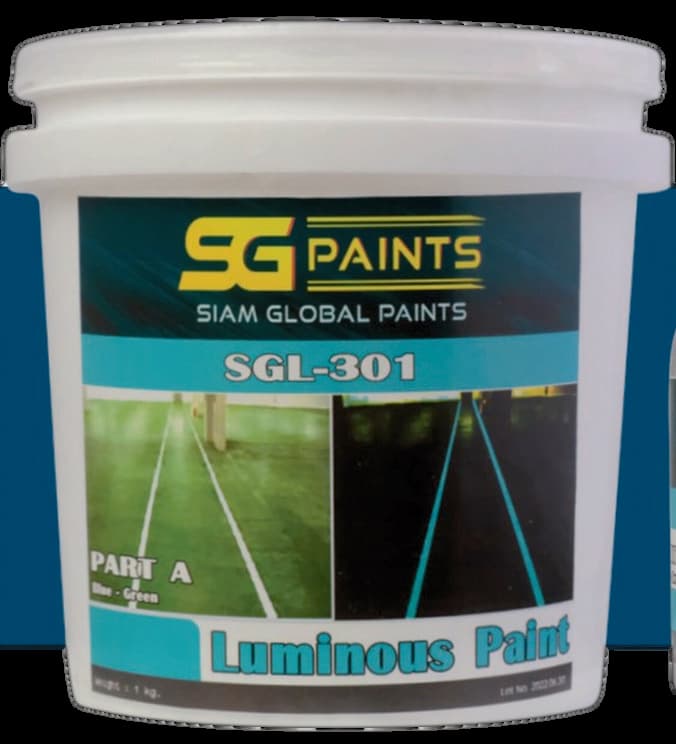
Photoluminescent Coating (Water-based 2K Polyurethane)
Safety Coating — Emergency Egress & Wayfinding
Purpose & best fit
Water-based photoluminescent coating that absorbs light (sunlight, fluorescent, or ambient) and emits it in darkness without external power. Used for emergency egress signage, road edges, parking columns.
Working principle
Photoluminescent pigment (typically strontium aluminate) absorbs photons → electrons jump to excited state → slowly release as visible light in darkness via phosphorescence. Not radioactive, not battery-powered.
Specifications
- System
- 2K water-based polyurethane
- Glow Duration
- 8–12 ชั่วโมง / hours ในที่มืด
- Service Life
- ≥ 1 ปี / year (กลางแจ้ง outdoor)
- Coverage
- 1 kg / 5 m² (1 coat), 1 kg / 2.5 m² (2 coats)
- Colors
- เขียวอมเหลือง, เขียวอมฟ้า / Yellow-Green, Blue-Green
Real-world applications
- Building emergency egress paths, exit signs
- Road shoulders, unlit road edges
- Parking garages, support columns, parking-bay markings
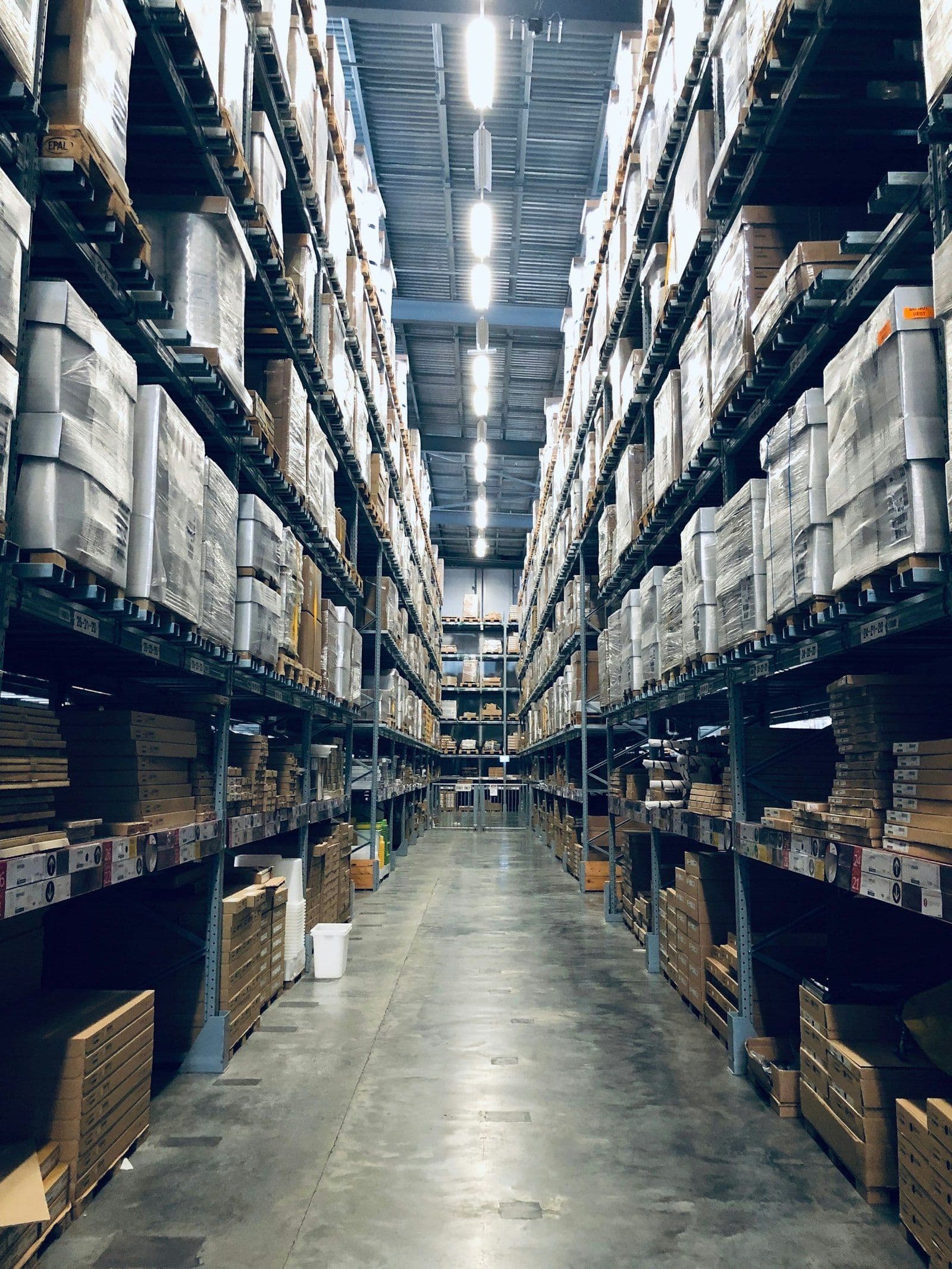
- Warehouse/factory aisles for emergency wayfinding
- Stair-tread edges in high-rises
Benefits & outcomes
- No electricity — keeps working during power failure
- No radioactive material — safer than tritium signage
- Water-based — indoor-safe, low VOC
- Apply over existing paint — easy retrofit
Industry reference standards
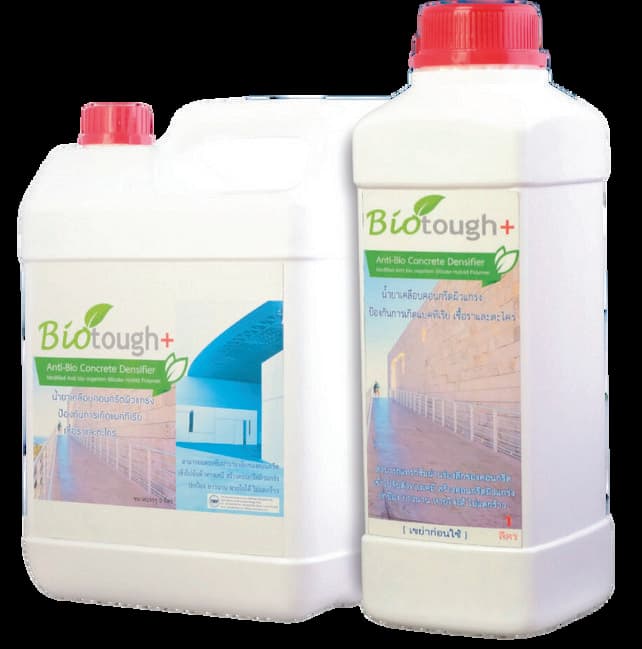
02Anti-Microbial Acrylic-Silicate Concrete Coating
Specialty Coating — Concrete Hardening + Antimicrobial
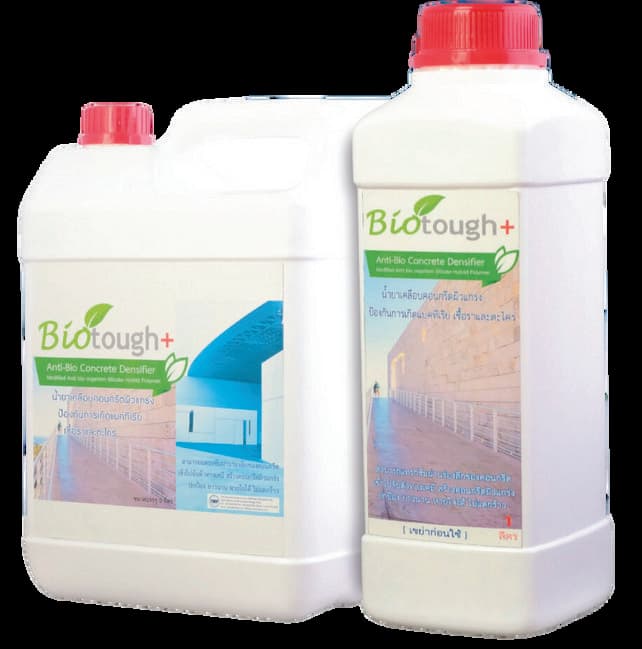
Anti-Microbial Acrylic-Silicate Concrete Coating
Specialty Coating — Concrete Hardening + Antimicrobial
Purpose & best fit
Water-based acrylic-silicate (≥ 10%) concrete surface treatment that simultaneously hardens the surface 3–5× and prevents fungal/algal colonisation for 3–5 years.
Working principle
Silicate reacts with free lime (Ca(OH)₂) in concrete to form dense calcium silicate hydrate (C-S-H) → pore-fills the surface, reduces water absorption. Acrylic polymer creates a clear hard inorganic film that resists spore adhesion.
Specifications
- System
- Water-based acrylic polymer + silicate (≥ 10%)
- Service Life
- ป้องกัน fungal/algae ≥ 3–5 ปี / years
- Hardness Gain
- 3–5 เท่าของผิวคอนกรีตเดิม / 3–5× original surface
- Color
- ขาวขุ่น, ขาว / Milky white, white (เคลือบ clear film)
- Efflorescence
- ป้องกันคราบเกลือขาว / Prevents salt blooms
Real-world applications
- Factory concrete floors with foot/forklift traffic
- Hospital and commercial-kitchen concrete walls
- Food-grade warehouse floors requiring dust-free surfaces
- Parking lots, outdoor concrete plazas
- Public restrooms vulnerable to mould
Benefits & outcomes
- 3–5× harder surface — resists forklift and foot-traffic abrasion
- Dust-free, stain-resistant — reduces re-coating frequency
- Prevents mould/algae growth for 3–5 years — cuts cleaning labour
- Stops efflorescence (white salt blooms) common in new concrete
- Industrial-grade chemical resistance
Industry reference standards
We've done this before — here's the proof
Engagements with documented outcomes, standards-compliance, and client trust — not stock photos.

Full-line HCFC + HFC + HFO + Specialty
Before you send an RFQ
Q1.Industrial paint vs household paint?+
Q2.What is a multi-coat system?+
Q3.How is DFT (Dry Film Thickness) measured?+
Q4.Anti-microbial paint for hospitals/food?+
Q5.Why photoluminescent paint?+
จัดส่งสีและสารเคลือบอุตสาหกรรมตามพื้นที่
เลือกจังหวัดของคุณเพื่อดูข้อมูลการจัดส่งและขอใบเสนอราคา
Related case studies & insights
3-Layer Epoxy SL + PU Topcoat Industrial Floor — 4,200 m² Cold-Storage Facility
Case study: 3-layer epoxy self-leveling + polyurethane topcoat installation for a -25°C cold-storage food factory in Samut Sakhon — BS 8204 / ISO 12944 / HACCP / GMP-compliant.
✓ 3-layer system applied across 4,200 m²: epoxy primer + 3 mm epoxy SL + PU topcoat
Metal Fabrication / Machine-Shop Fit-Out and Maintenance Field Guide — Safe Hot Work to NFPA 51B + Fire Blankets · Sa 2.5 Surface Prep to ISO 8501 · ISO 12944 Coating Systems + Zinc-Rich Primer · DFT/Holiday Inspection · Machine Lubrication + ISO 8573 Compressed Air + Electrical Safety + How to Lock In Material Pricing
Field guide for metal fabrication / machine-shop / structural-steel workshop owners and supervisors: plan the whole workshop by function — control hot work (weld/cut/grind) per NFPA 51B with the right fire-blanket grade (EN 1869/FM 4950), prepare steel to Sa 2.5 per ISO 8501 before coating, choose a corrosion coating system per ISO 12944 by environment class (C1-CX) with zinc-rich primer/powder/liquid, inspect dry film thickness (ISO 19840/SSPC-PA2) and holidays, lubricate machinery (hydraulic/gear/grease) + monitor oil/bearing condition, control compressed-air quality (ISO 8573) for abrasive blasting and spraying, and manage electrical safety (arc flash NFPA 70E) + cranes/hoists (ASME B30) — plus how to standardize materials to lock pricing and delivery.
Marine & Shipyard Corrosion Protection Field Guide — Choose the Whole System: Surface Prep (Sa 2.5) · ISO 12944 C5-M/CX/Im2 Paint Systems · Cathodic Protection (Anode/ICCP) · Safe Hot Work + How to Lock In Project Material Pricing
Field guide for shipyard, jetty, and coastal steel-structure maintenance: plan corrosion protection across the whole asset by zone (atmospheric/splash/immersed/buried) — abrasive blast Sa 2.5 per ISO 8501, select an ISO 12944 paint system for C5-M/CX and immersed Im2, design cathodic protection with sacrificial anodes (zinc/aluminium/magnesium) vs ICCP per DNV-RP-B401/ISO 12696, control hot work in confined spaces per NFPA 51B, and lubricate marine machinery — plus how to standardize materials to lock project pricing and delivery.
Holiday / Pinhole Detection in Coatings — Wet Sponge vs High-Voltage Spark per NACE/AMPP SP0188 & ASTM D5162
A guide to detecting holidays/pinholes (invisible discontinuities) in protective coating films: choosing low-voltage wet sponge (thin film < 500 µm) vs high-voltage spark/DC (thick film > 500 µm) per NACE/AMPP SP0188, SP0490 and ASTM D5162 — setting voltage by DFT (too low misses holidays, too high burns the film), which work requires it (tanks/pipes/immersion/marine), mark-repair-retest, and what a TOR must specify.