

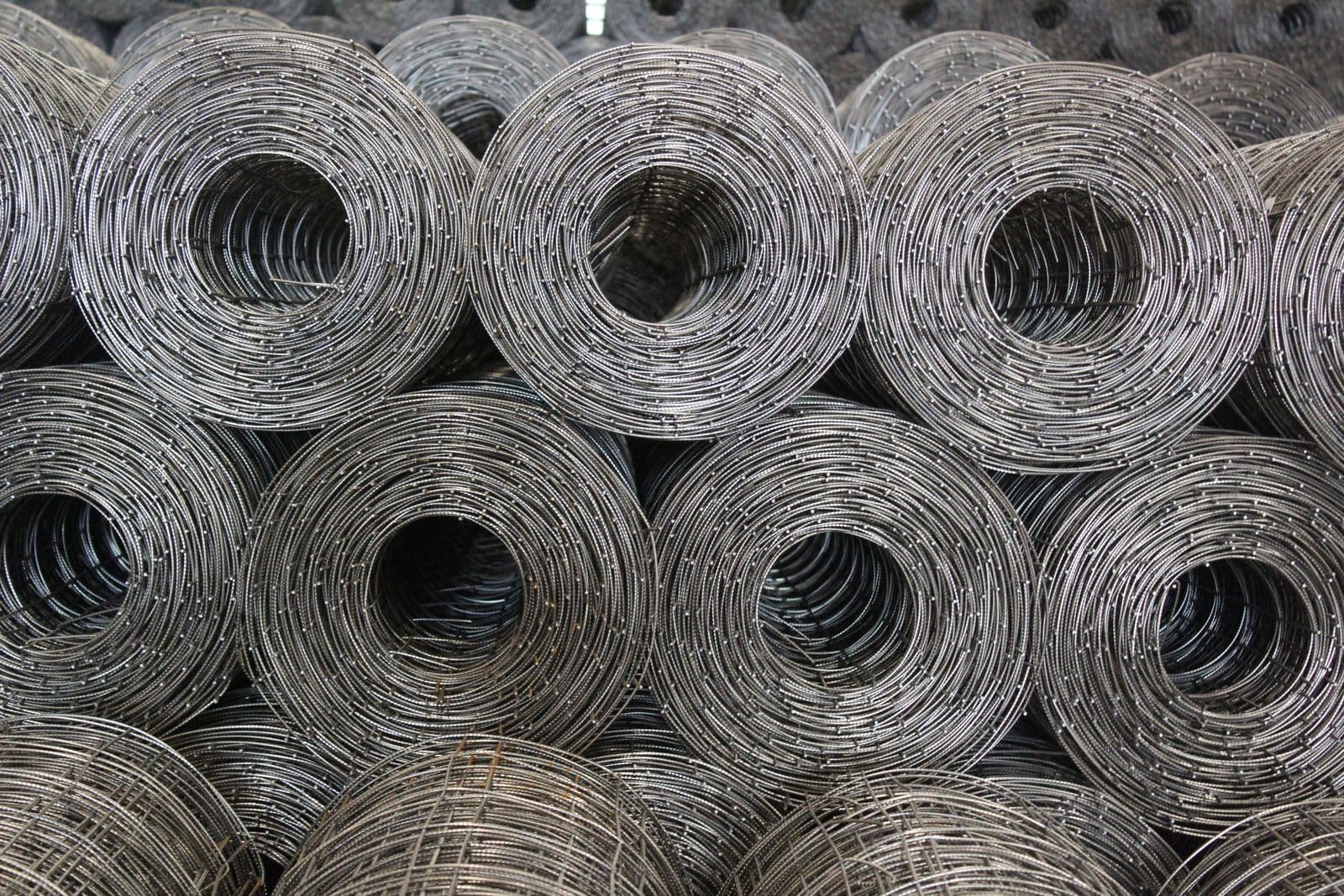
Steel parts, machined components, or marine spares shipped by sea or stored long-term often rust before reaching the customer, because container humidity and temperature swings cause condensation. VCI (vapor corrosion inhibitor) packaging releases an inhibitor that coats the metal in a thin molecular layer inside sealed packaging — protecting it with no oil to apply and no wash-off before use. Choose: VCI film (wrap/cover plate, coil, structures), VCI bag (small-to-medium parts, reaches bores/threads/recesses), desiccant (a second moisture layer). SAHA supplies quote-only, with sizing and export-packing guidance included.
Metal parts shipped by sea or stored long-term face the same enemy: humidity. Inside a container where temperature swings day to night, airborne moisture condenses onto the metal surface, producing rust or oxide staining before the goods reach the destination customer — well-made parts spoiled in transit. VCI (Vapor Corrosion Inhibitor) packaging solves this without applying any oil. This article explains how it works and how to choose between VCI film, VCI bags, and desiccants.
How VCI works
VCI material (film or bag) releases a corrosion-inhibiting compound as a vapor inside sealed packaging. The vapor settles on the metal as an extremely thin molecular layer, suppressing the electrochemical reaction that causes rust. Advantages over rust-preventive oil:
- No application — just wrap or bag and seal; the vapor distributes itself
- No wash-off — unwrap and assemble/use immediately (critical for machined parts)
- Reaches where oil can't — bores, threads, internal recesses
- Nitrite-free — the formulation SAHA supplies uses no nitrites
Standards note: VCI performance depends on packaging tightness, duration, and inhibitor quantity per surface area/volume. We advise on sizing and packing method to suit the actual part and transport — grade-specific specs and certificates are available on request when you ask for a quote.
Choosing film / bag / desiccant
| Product | Best for | How it's used |
|---|---|---|
| VCI Anti-Corrosion Film | Steel plate, coil, structures, large/flat parts | Wrap, cover, or line container interiors / cover pallets |
| VCI Anti-Corrosion Bag | Machined/turned parts, marine spares, molds, export sets | Place the part inside, seal the bag; vapor surrounds the surface |
| Desiccant Moisture Absorber | Every export/humid-storage job (add-on) | Place in the packaging with VCI; pulls humidity below the rust point |
Quick rule: large/flat part → film · small-to-medium with bores/recesses → bag · sea freight / very humid → always add a desiccant.
A fit for Thai exporters
Thailand's 2025 exports hit a record high (+12.9%, led by electrical goods, machinery, and automotive) — a large volume of metal parts travels weeks by sea through humid conditions. VCI is a standard way to cut rust-claim risk without adding an oil-removal step at the destination.
Ordering
It's a made-to-order (quote-only) item — tell us (1) part type + size/weight, (2) volume per shipment, (3) transport mode and storage duration. We'll help select the right VCI film/bag and desiccant plus export packing method. VCI is part of SAHA's complete metal-protection approach — supplied alongside anti-rust coatings and sacrificial anodes from one source.
Get this guide as a reference brief (PDF)
Summary + full section list + standards cited, Saha-branded for your memo/RFQ — emailed to you too.
Questions after reading? Talk to our engineers
Tell us what you need — our engineers help you spec it right, with a real quote. No charge.
Need help with this in your facility?
Our team handles full procurement and installation for the topics covered in this article. Free quote promptly during business hours.
Another line of ours — spreadsheet tools for SMEs
Quote Register + Win Rate (Thai + English editions)
For quotes that go silent — one row per quote, telling you which to chase today and what your real win rate is.
Frequently Asked Questions
1How is VCI different from applying rust-preventive oil?
+
2Should I use VCI film or VCI bags?
+
3Do I also need a desiccant?
+
4How do I order, and is there a sizing service?
+
Comparison tables related to this article
Related content
Budget Rust Protection in Thailand — Standard Line vs NOVA Eco (2026 Guide + Real Prices)
A tight budget is no reason to skip corrosion protection. Comparing the standard line (TIS 3029-2563 / ISO 12696) with the NOVA GalvaTect and NOVA Paints budget line — real prices and a 4-question decision framework.
Why the Cheapest Corrosion Protection Today Is Often the Most Expensive Over 20 Years — Think in Life-Cycle Cost (LCC)
A guide to costing corrosion-protection work as Life-Cycle Cost (LCC/TCO) per ISO 15686-5 + ISO 12944 — why the lowest sticker price is rarely the lowest total cost, the hidden costs (repaint cycles + downtime), and how to compare options on Equivalent Annual Cost for factory, port, and government work in Thailand.
Marine & Shipyard Corrosion Protection Field Guide — Choose the Whole System: Surface Prep (Sa 2.5) · ISO 12944 C5-M/CX/Im2 Paint Systems · Cathodic Protection (Anode/ICCP) · Safe Hot Work + How to Lock In Project Material Pricing
Field guide for shipyard, jetty, and coastal steel-structure maintenance: plan corrosion protection across the whole asset by zone (atmospheric/splash/immersed/buried) — abrasive blast Sa 2.5 per ISO 8501, select an ISO 12944 paint system for C5-M/CX and immersed Im2, design cathodic protection with sacrificial anodes (zinc/aluminium/magnesium) vs ICCP per DNV-RP-B401/ISO 12696, control hot work in confined spaces per NFPA 51B, and lubricate marine machinery — plus how to standardize materials to lock project pricing and delivery.
Designing a Galvanic Cathodic Protection System — Current Demand, Anode Mass & Anode Count (DNV-RP-B401 / ISO 12696)
A step-by-step guide to sizing a sacrificial-anode corrosion protection system — current density by environment, the anode mass formula (M = I·t·8760 / u·ε), anode count from current output, and the −850 mV / 100 mV decay criteria, with a worked example. References DNV-RP-B401, ISO 12696, NACE SP0169 / ISO 15589, ASTM B418.