
Comparing two cathodic-protection methods: Sacrificial Anode (galvanic) vs Impressed Current (ICCP) — principles, anodes (Zn/Al/Mg vs MMO/Ti), the -850 mV criterion, standards NACE SP0169 / ISO 15589 / ISO 12696, and selection by structure size and environment in Thailand.
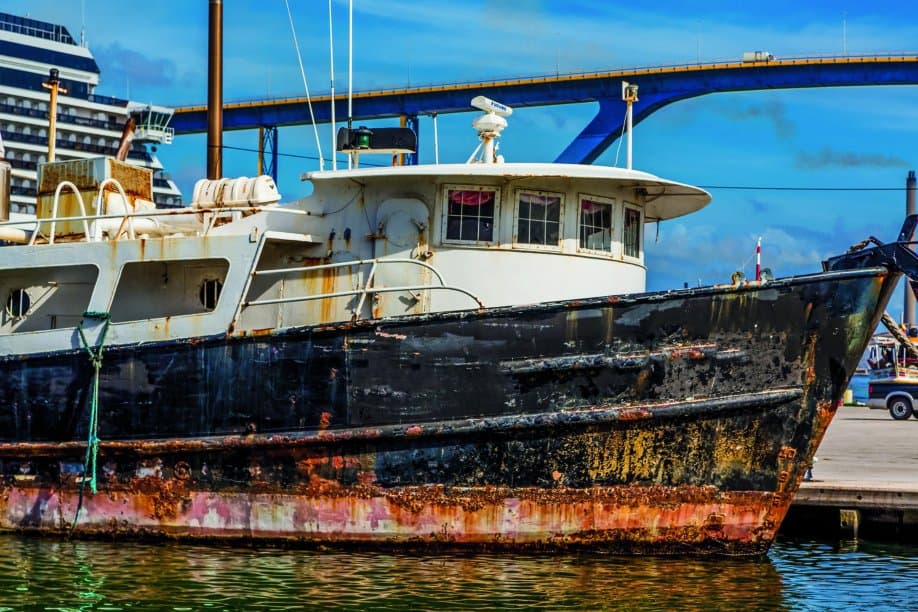
Corrosion eats steel structures in seawater, soil, and concrete every day. Cathodic Protection (CP) stops it by making the steel a "cathode" (a non-corroding pole). There are two main methods to choose correctly between: Sacrificial Anode and Impressed Current (ICCP).
This article compares the two systems, the protection criterion, the standards, and selection for real work in Thailand.
1. The Principle — Making Steel a Cathode
Both methods drive "protective current" into the structure so the steel stops releasing electrons (stops corroding) — differing in the "current source":
| Sacrificial Anode (Galvanic) | ICCP (Impressed Current) | |
|---|---|---|
| Current source | active metal corrodes instead | rectifier AC→DC |
| Anode | zinc / aluminium / magnesium | inert: MMO/titanium, Si cast iron |
| Power | no | yes |
| Current | limited (fixed) | high, adjustable |
| Anode life | limited (consumed) | long |
| Maintenance | low | needs monitoring + upkeep |
| Installation | easy | complex |
2. Which to Choose
flowchart TD
  A[Need Cathodic Protection] --> B{Size + current demand?}
  B -->|Small-medium / low current| C{Power + maintenance team?}
  B -->|Large / high current / long pipe| D[ICCP
rectifier + MMO anode]
  C -->|No / want simple| E[Sacrificial Anode
Zn/Al/Mg]
  C -->|Yes| F{High-resistivity soil/water?}
  F -->|High| D
  F -->|Low seawater| E
  E --> G[Measure -850 mV CSE
confirm protection]
D --> G- Sacrificial → ships, buoys, jetty piles, buried tanks, small-medium work, seawater (conductive), no power
- ICCP → long pipelines, large RC bridges, high-current structures, high-resistivity soil/water
3. Protection Criterion + Standards
- -850 mV (or more negative) versus Cu/CuSO₄ reference electrode (CSE), IR-drop corrected — per NACE SP0169 + ISO 15589-1
- Concrete → ISO 12696 (polarization decay ≥100 mV)
- Harbour/marine → ISO 13174, sacrificial design → DNV-RP-B401
Always measure potential with a real reference electrode — don't install and assume it works.
4. CP Selection/Design Checklist
🧮 If you have settled on sacrificial anodes, size them in the Anode Sizing Calculator. ICCP is a different calculation — it needs a transformer-rectifier design instead.
- Estimate current demand — bare steel area + environment
- Measure soil/water resistivity → points to sacrificial vs ICCP
- Power + maintenance team available → required for ICCP
- Select the anode by environment (Zn/Al seawater, Mg fresh water/soil, MMO for ICCP)
- Place reference electrodes to verify -850 mV + keep records
We supply anodes for Cathodic Protection of all types — zinc (99.995%), aluminium (Al-Zn-In), magnesium, and concrete anodes — manufactured to ISO 9001 + DNV Type Approval, with guidance on designing sacrificial systems per NACE SP0169 / ISO 15589 / ISO 12696, and assessing whether your work suits sacrificial or should consider ICCP.
Talk to our engineering team to design corrosion protection that fits the job — call 02-096-2118 or LINE OA @sahawatt1988.
Summary
- Cathodic Protection = make steel a cathode to stop corrosion — two methods
- Sacrificial Anode (Zn/Al/Mg): no power, easy, low maintenance — small-medium/marine/no-power work
- ICCP (rectifier + MMO anode): high adjustable current, long life — large/high-current/high-resistivity work
- Criterion: -850 mV vs CSE (NACE SP0169 / ISO 15589) · concrete ISO 12696
- Choose by: size · current demand · resistivity · power/maintenance availability
The right CP system stops rust at its electrochemical root, extending steel structure life by decades.
Get this guide as a reference brief (PDF)
Summary + full section list + standards cited, Saha-branded for your memo/RFQ — emailed to you too.
Questions after reading? Talk to our engineers
Tell us what you need — our engineers help you spec it right, with a real quote. No charge.
Need help with this in your facility?
Our team handles full procurement and installation for the topics covered in this article. Free quote promptly during business hours.
Another line of ours — spreadsheet tools for SMEs
Quote Register + Win Rate (Thai + English editions)
For quotes that go silent — one row per quote, telling you which to chase today and what your real win rate is.
Frequently Asked Questions
1How do the two cathodic protection methods differ?
+
2Which should I choose?
+
3What is the criterion for successful protection?
+
4Which Thai applications use CP?
+
Comparison tables related to this article
Related content
Carbonation vs Chloride — The Two Root Causes of Rebar Corrosion, and How to Match the Right Protection
Rebar in concrete corrodes by two fundamentally different mechanisms: carbonation (pH drop, uniform corrosion) and chloride attack (localized pitting). How to tell them apart with phenolphthalein + chloride profiling, EN 206 exposure classes, the Tuutti model, and how to match protection (cover, CP anodes, coatings) to the actual cause.
Corrosion-Resistant Rebar — Epoxy (A775) vs Galvanized (A767) vs Stainless (A955): Choosing for Budget and Service Life
Comparing three corrosion-resistant rebar systems: epoxy-coated (ASTM A775/A934), hot-dip galvanized (A767), and stainless (A955) — protection mechanism, chloride threshold, cost relative to black bar, installation cautions, and a decision tree to choose by exposure + design life for Thai coastal projects.
Why the Cheapest Corrosion Protection Today Is Often the Most Expensive Over 20 Years — Think in Life-Cycle Cost (LCC)
A guide to costing corrosion-protection work as Life-Cycle Cost (LCC/TCO) per ISO 15686-5 + ISO 12944 — why the lowest sticker price is rarely the lowest total cost, the hidden costs (repaint cycles + downtime), and how to compare options on Equivalent Annual Cost for factory, port, and government work in Thailand.
Marine & Shipyard Corrosion Protection Field Guide — Choose the Whole System: Surface Prep (Sa 2.5) · ISO 12944 C5-M/CX/Im2 Paint Systems · Cathodic Protection (Anode/ICCP) · Safe Hot Work + How to Lock In Project Material Pricing
Field guide for shipyard, jetty, and coastal steel-structure maintenance: plan corrosion protection across the whole asset by zone (atmospheric/splash/immersed/buried) — abrasive blast Sa 2.5 per ISO 8501, select an ISO 12944 paint system for C5-M/CX and immersed Im2, design cathodic protection with sacrificial anodes (zinc/aluminium/magnesium) vs ICCP per DNV-RP-B401/ISO 12696, control hot work in confined spaces per NFPA 51B, and lubricate marine machinery — plus how to standardize materials to lock project pricing and delivery.