
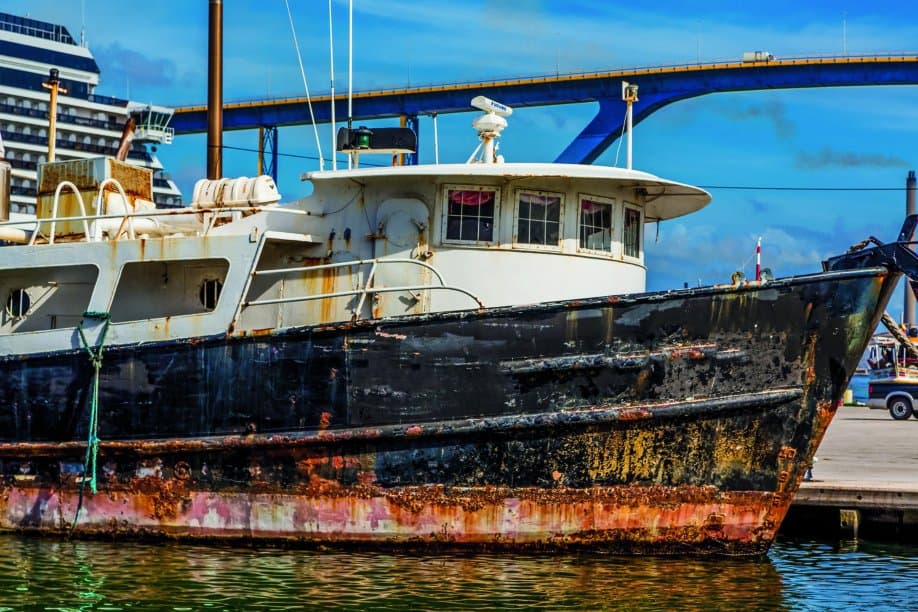

Comparing two corrosion-protection routes for structural steel: zinc-rich primer in a paint system to ISO 12944 vs hot-dip galvanizing to ISO 1461 — corrosivity categories C1-CX, thickness vs life, duplex systems, and how to choose by environment in Thailand.
Structural steel — roof frames, purlins, columns, racks, guard rails, pipe — is an investment that stays with a plant for decades. But in Thailand's climate (hot, humid, often near the sea, industrial air), corrosion eats away at that value every day.
The question that comes up at spec time: "zinc-rich primer paint system or hot-dip galvanizing?" There is no fixed answer — it depends on environment, part geometry, and ease of repair. This article compares them per ISO 12944 and ISO 1461.
1. Start with "How Severe" — ISO 12944 Corrosivity Category
Before choosing any system, classify the environment per ISO 12944-2 (referencing ISO 9223):
| Category | Environment | Thailand examples |
|---|---|---|
| C1 | Very low — temperature-controlled interior | clean rooms, offices |
| C2 | Low — dry rural | rural warehouses |
| C3 | Medium — urban/light industrial | typical city factories |
| C4 | High — industrial/coastal | industrial estates, near sea |
| C5 | Very high — heavy industrial/marine | chemical plants, seaside |
| CX | Extreme — offshore | offshore platforms, ports |
From category + required durability (low 7-15 yr / medium 15-25 / high 25+ / very high), you then set the system and thickness.
2. Option A — Paint System with Zinc-Rich Primer (ISO 12944-5)
Zinc-rich primer = a primer with high zinc dust content giving galvanic (cathodic) protection — the zinc corrodes instead of the steel where scratched:
- Two types: inorganic (ethyl silicate — heat/solvent resistant) vs organic (epoxy — easy to apply/repair)
- Typical thickness ~60-80µm — a zinc-rich primer at 80µm adds roughly ~5 years of system life
- Needs a topcoat (epoxy mid-coat + polyurethane/fluoropolymer finish)
- Strengths: field-applicable, easy spot repair, color choice, works on large/installed parts
- Weaknesses: quality depends on surface prep (sandblast Sa 2.5) + workmanship + consistent thickness
3. Option B — Hot-Dip Galvanizing (ISO 1461)
Hot-dip galvanizing = immersing steel in molten zinc at ~450°C, forming a metallurgically bonded zinc-iron alloy layer:
- Thickness per ISO 1461 — steel >6mm requires an average ≥85µm (life proportional to thickness)
- Protects by both barrier + galvanic action and coats recesses/hollow interiors
- Strengths: uniform over the whole part, durable, low maintenance, excellent adhesion
- Weaknesses: done in the works before installation (bath-size limited), field weld repairs need zinc-rich repair paint, natural zinc-grey color
- Thailand references TIS 2228-2559 for hot-dip galvanizing
4. How to Decide
flowchart TD
  A[Structural steel] --> B{Define ISO 12944
corrosivity + durability}
  B --> C{Can the part be coated
in the works pre-install?}
  C -->|Yes + fits the bath| D[Hot-Dip Galvanizing
ISO 1461]
  C -->|No - large/installed| E[Paint + zinc-rich primer
ISO 12944-5]
  D --> F{Need maximum life
C5/CX?}
  F -->|Yes| G[Duplex: galv + paint
synergy 1.5-2.5x]
  F -->|No| H[Galvanizing alone]
  E --> I[Verify DFT + prep Sa 2.5]
  G --> J[Acceptance + keep cert]
  H --> J
  I --> J
Selection summary:
- Standard parts, works-coatable → galvanizing
- Large/installed parts/color required → zinc-rich primer paint system
- Marine/heavy-industrial, maximum life → duplex (galv + paint)
5. Corrosion Spec Checklist
- State the corrosivity category + durability in the TOR/spec (not just "anti-rust paint")
- Define thickness (DFT/coating mass) per coat + measurement method
- Specify surface prep (Sa 2.5 for paint systems) — the make-or-break for service life
- Choose the system by access — galvanizing needs to fit the bath
- Accept with instruments (DFT gauge / coating thickness) + keep material certs
We supply both corrosion routes — zinc-rich primer + epoxy + polyurethane for field-applied work to ISO 12944, and we coordinate hot-dip galvanizing to ISO 1461 / TIS 2228, including duplex systems for marine work — with guidance on choosing the corrosivity category and verifying DFT.
Talk to our engineering team to set a corrosion system matched to your environment and budget — call 02-096-2118 or LINE OA @sahawatt1988.
Summary
- Always start by classifying the ISO 12944 corrosivity category (C1-CX) + required durability
- Zinc-rich primer (ISO 12944-5): galvanic protection, field-applicable/easy repair, needs a topcoat
- Hot-dip galvanizing (ISO 1461): ≥85µm metallic layer, uniform, durable, low maintenance, but works-applied
- Duplex (galv + paint) gives the longest life via a 1.5-2.5x synergy — ideal for marine/heavy work
- Specs must state category + DFT + surface prep + acceptance method
Choosing right from the start saves repeated repair/recoating costs across the structure's whole life.
Get this guide as a reference brief (PDF)
Summary + full section list + standards cited, Saha-branded for your memo/RFQ — emailed to you too.
Questions after reading? Talk to our engineers
Tell us what you need — our engineers help you spec it right, with a real quote. No charge.
Need help with this in your facility?
Our team handles full procurement and installation for the topics covered in this article. Free quote promptly during business hours.
Another line of ours — spreadsheet tools for SMEs
Quote Register + Win Rate (Thai + English editions)
For quotes that go silent — one row per quote, telling you which to chase today and what your real win rate is.
Frequently Asked Questions
1Which lasts longer — zinc-rich primer or hot-dip galvanizing?
+
2What is a duplex system and why does it last longer?
+
3What do ISO 12944 corrosivity categories C1-CX mean?
+
4Which system for coastal work in Thailand?
+
Comparison tables related to this article
Related content
Corrosion-Resistant Rebar — Epoxy (A775) vs Galvanized (A767) vs Stainless (A955): Choosing for Budget and Service Life
Comparing three corrosion-resistant rebar systems: epoxy-coated (ASTM A775/A934), hot-dip galvanized (A767), and stainless (A955) — protection mechanism, chloride threshold, cost relative to black bar, installation cautions, and a decision tree to choose by exposure + design life for Thai coastal projects.
Carbonation vs Chloride — The Two Root Causes of Rebar Corrosion, and How to Match the Right Protection
Rebar in concrete corrodes by two fundamentally different mechanisms: carbonation (pH drop, uniform corrosion) and chloride attack (localized pitting). How to tell them apart with phenolphthalein + chloride profiling, EN 206 exposure classes, the Tuutti model, and how to match protection (cover, CP anodes, coatings) to the actual cause.
ICCP vs Sacrificial Anode — Choosing a Cathodic Protection System per NACE SP0169 / ISO 15589 in Thailand
Comparing two cathodic-protection methods: Sacrificial Anode (galvanic) vs Impressed Current (ICCP) — principles, anodes (Zn/Al/Mg vs MMO/Ti), the -850 mV criterion, standards NACE SP0169 / ISO 15589 / ISO 12696, and selection by structure size and environment in Thailand.
Rust Converter vs Sandblast + Epoxy Primer — 5-Year TCO and How to Choose per SSPC
Comparing two approaches to managing structural steel rust in Thailand — 5-year total cost of ownership, job speed, SSPC-SP / ISO 12944 standards, and the conditions that determine the right choice