

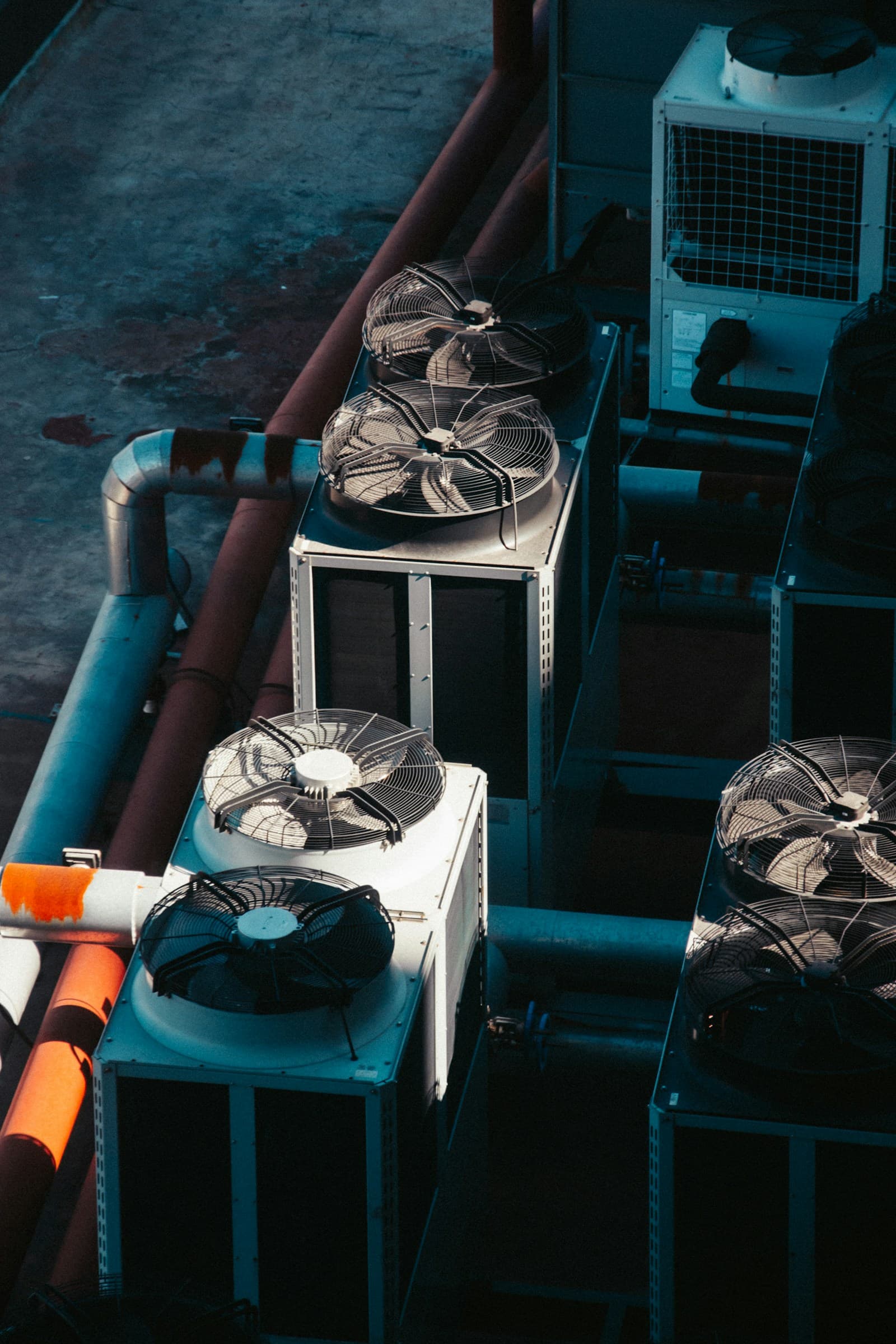
R22 (HCFC-22) is being phased out under the Montreal Protocol. What Thai factories and building owners need to know — replacement options (R410a, R32, R404A), retrofit vs. full system replacement, and regulatory requirements.
If your factory or building still runs air conditioning or refrigeration systems charged with R22, it is time to plan — not because your equipment is failing, but because R22 supply is permanently diminishing under the globally binding Montreal Protocol schedule.
Why R22 Is Being Phased Out
R22 (HCFC-22, Chlorodifluoromethane) was the dominant refrigerant from the 1980s through the early 2000s. Its key properties explain both its popularity and its regulatory problem:
- ODP (Ozone Depletion Potential) = 0.055 — Unlike the fully banned CFCs (R12, ODP = 1.0), R22 still causes measurable ozone layer damage
- GWP (100-year) = 1,810 — Approximately 1,810 times more potent as a greenhouse gas than CO₂
- ASHRAE 34 Safety Class: A1 (non-flammable, low toxicity)
Montreal Protocol Phase-Out Timeline
| Period | Milestone |
|---|---|
| 1992 | Montreal Protocol announces HCFC phase-out schedule |
| 2004 | Developed countries: ban R22 in new equipment |
| 2010 | Developing countries (incl. Thailand): freeze HCFC production baseline |
| 2020 | Thailand: reduce HCFC consumption 35% from baseline |
| 2025 | Thailand: reduce HCFC consumption 67.5% from baseline |
| 2030 | Complete ban on HCFC production/import in developing countries |
| 2040 | Global phase-out complete |
Thailand ratified the Montreal Protocol in 1989 and the Kigali Amendment in 2019, which extends phase-down requirements to HFCs (including R410a and R404A) in subsequent rounds.
The practical situation in 2026:
- R22 is still purchasable in Thailand, but only from aging stockpiles and reclaimed/recycled sources — no new production
- R22 prices have risen sharply: now ฿2,500–4,000/kg, versus R32 at ฿1,200–1,500/kg
- Supply is unreliable — peak summer seasons see frequent shortages
Replacement Options
Quick Reference Table
| Refrigerant | GWP | ASHRAE Class | Pressure vs R22 | Retrofit Feasibility |
|---|---|---|---|---|
| R410a | 2,088 | A1 | ~70% higher | Requires new equipment |
| R32 | 675 | A2L | ~30% higher | Requires new equipment |
| R404A | 3,922 | A1 | ~20% higher | Cold storage, oil change needed |
| R407C | 1,774 | A1 | ~10–15% higher | Retrofit feasible, EXV retuning |
| R422D / MO99 | 2,729 | A1 | Very similar | Drop-in (oil change required) |
| R134a | 1,430 | A1 | ~30% lower | Medium-temp cold storage only |
| R290 (Propane) | 3 | A3 | Very similar | Specialists only, flammable |
Three Strategies for Thai Facilities
Strategy 1: Drop-in Retrofit with R422D or MO99
Drop-in refrigerants are designed to work in existing R22 systems with minimal modification. Best for:
- Systems under 10 years old in good mechanical condition
- When compressor is still performing well
- When minimizing upfront cost is the priority
Critical requirements:
- Change compressor oil from mineral to POE — R22 works with mineral oil, but drop-in alternatives require Polyolester (POE) oil. The system must be thoroughly flushed to prevent oil mixing.
- Replace the liquid line filter drier — POE oil is more hygroscopic; fresh desiccant is essential.
- Adjust TXV/EXV settings — Expansion valve may need retuning to match new thermodynamic properties.
- Document new running conditions — Record suction/discharge pressure and amp draw at the new refrigerant to establish a new baseline for future maintenance.
Limitations: R422D has a GWP of 2,729 — higher than R410a — and will face future regulatory pressure under the Kigali Amendment HFC phase-down. Treat this as an interim solution.
Strategy 2: Retrofit with R407C
R407C (an HFC blend of R32/R125/R134a at 23/25/52%) was specifically developed as an R22 retrofit for direct expansion systems, particularly:
- Medium-to-large chillers (10–100 RT)
- Commercial refrigeration
- Air handling units in office buildings
Advantage: Lower GWP than most drop-in options (1,774). Thermodynamic properties are closer to R22 than alternatives.
Limitation: As a blend, R407C exhibits a ~7°C temperature glide (difference between bubble and dew point), which requires EXV retuning and may necessitate coil changes in flooded evaporator systems.
Strategy 3: Full System Replacement
Recommended when:
- Equipment is 10+ years old
- System has leaked repeatedly (> 2 times per year) or had compressor replacements
- Energy audit shows replacement ROI < 5 years
- Cold storage requires temperatures below -20°C
Recommended replacements:
- Small split systems: R32 (Daikin/Mitsubishi/Panasonic new models)
- Medium chillers: R410a VRF or R32 chiller
- Commercial cold storage (-5 to +10°C): R404A or R407A/F
- Industrial cold storage (< -20°C): R404A/R507 or R744 (CO₂) cascade
Retrofit vs. Replacement Decision Framework
| Factor | Drop-in Retrofit | Full Replacement |
|---|---|---|
| Upfront cost | Low | High (10–30× more) |
| Remaining useful life | Tied to existing compressor | 15–20 years |
| Energy efficiency | Same or slightly worse | 15–40% better |
| Regulatory risk | Medium (high GWP) | Low (modern refrigerant) |
| Best when | Equipment < 10 years, budget constrained | Aging equipment, efficiency matters |
Simple decision rule:
If the cost of retrofit + accumulated R22 purchase over 3 years exceeds 50% of new equipment cost → replacement is more economical.
Thai Regulatory Requirements
- Hazardous Substances Act B.E. 2535 — R22 is a Class 3 hazardous substance. Venting to atmosphere is illegal. Importers and distributors must hold valid licenses.
- Ministry of Industry Announcement — Prohibits importing R22 for use in new equipment since 2010 (service/maintenance of existing systems is permitted).
- Recovery and recycling — All recovery must use equipment meeting AHRI 740 standards. Illegal venting carries criminal penalties (fines and imprisonment).
- Import quota system — HCFC importers must obtain annual quotas from the Department of Industrial Works (DIW).
Summary Recommendations
R22 system < 7 years old, good condition: → Drop-in with R422D/MO99 as interim solution; budget for replacement in 5–7 years.
R22 system 7–12 years old: → Calculate full TCO comparison. In many cases, new equipment is more economical.
R22 system > 12 years old: → Replace immediately. Do not invest in retrofit.
Industrial cold storage using R22: → Plan migration to R404A or CO₂ cascade system for long-term efficiency and regulatory compliance.
Sahawatthanakit (1988) supplies R32, R410a, R404A, R134a, and POE oil for retrofit projects — with full MSDS documentation and certificates of analysis required for government and ISO-audited facilities.
Get this guide as a reference brief (PDF)
Summary + full section list + standards cited, Saha-branded for your memo/RFQ — emailed to you too.
Questions after reading? Talk to our engineers
Tell us what you need — our engineers help you spec it right, with a real quote. No charge.
Need help with this in your facility?
Our team handles full procurement and installation for the topics covered in this article. Free quote promptly during business hours.
Another line of ours — spreadsheet tools for SMEs
Landed Cost Per Unit — Import Costing (Thai + English editions)
Know what one unit really costs once it reaches your warehouse — duty, VAT, clearance and trucking included, with the lowest price that still meets your target margin.
Comparison tables related to this article
Related content
Thailand's Air Conditioner Export Boom 2026 — How to Choose the Right Refrigerant Grade Under the Law
Thailand is a top global air-conditioner exporter and 2026 shipments are surging on the European heatwave. This article covers the export figures, why refrigerant demand is climbing, and how to choose R-32 / R-410A / R-454B correctly under the Kigali Amendment and EU F-gas rules — for technicians and factories.
Pick the Right Refrigerant for the Job — A Contractor's Field Guide: Charge Tables by System (Split / VRF / Chiller / Cold Room / Ice Plant / Auto) + R-22/R-404A Replacements + How to Source Cylinders Fast
Field guide for HVAC/R contractors in Thailand: choose the correct refrigerant by actual system type (residential/commercial Split & VRF, chillers, MT/LT cold rooms, ice plants, automotive, ULT) + R-22/R-404A drop-in & retrofit table + compressor oil you must change with it (MO/POE) + how to source refrigerant fast at contractor/fleet pricing.
Very-Low / Ultra-Low Temperature Refrigerant Retrofit — Replacing R-13B1 / R-503 / R-13 in Freeze Dryers & Cascade Systems with R-508B, Done Right
A guide to very-low / ultra-low temperature (VLT/ULT) refrigerant retrofits for freeze dryers (lyophilizers), environmental chambers, blast freezers and cascade systems in Thailand: why R-13B1 (halon), R-503 and R-13 (CFC) are obsolete/unobtainable, the modern replacement R-508B across −40 to −80°C, the most-missed core of the job — changing compressor oil (mineral/AB → POE) and low-temperature oil return, how glide/azeotrope affects charging and the TXV, retrofitting both stages of a cascade, the correct procedure (recover → flush → change drier/seals → deep vacuum < 500 micron → charge by weight → pulldown), and why moisture is the deadly enemy at ULT — plus the high GWP of R-508B/R-23, lower-GWP options, and refrigerant import licensing via Thailand's DIW under Montreal/Kigali obligations.
R32 / R410a Refrigerant Prices and Suppliers in Thailand 2026 — Buying Guide for Technicians and Factories
Buying guide to R32 and R410a refrigerants for Thai technicians/factories, with reference price ranges (estimated from an early-2026 market survey — not fixed prices; they move with oil/FX), a GWP table, purchasing methods, minimum order quantities, and certified suppliers