
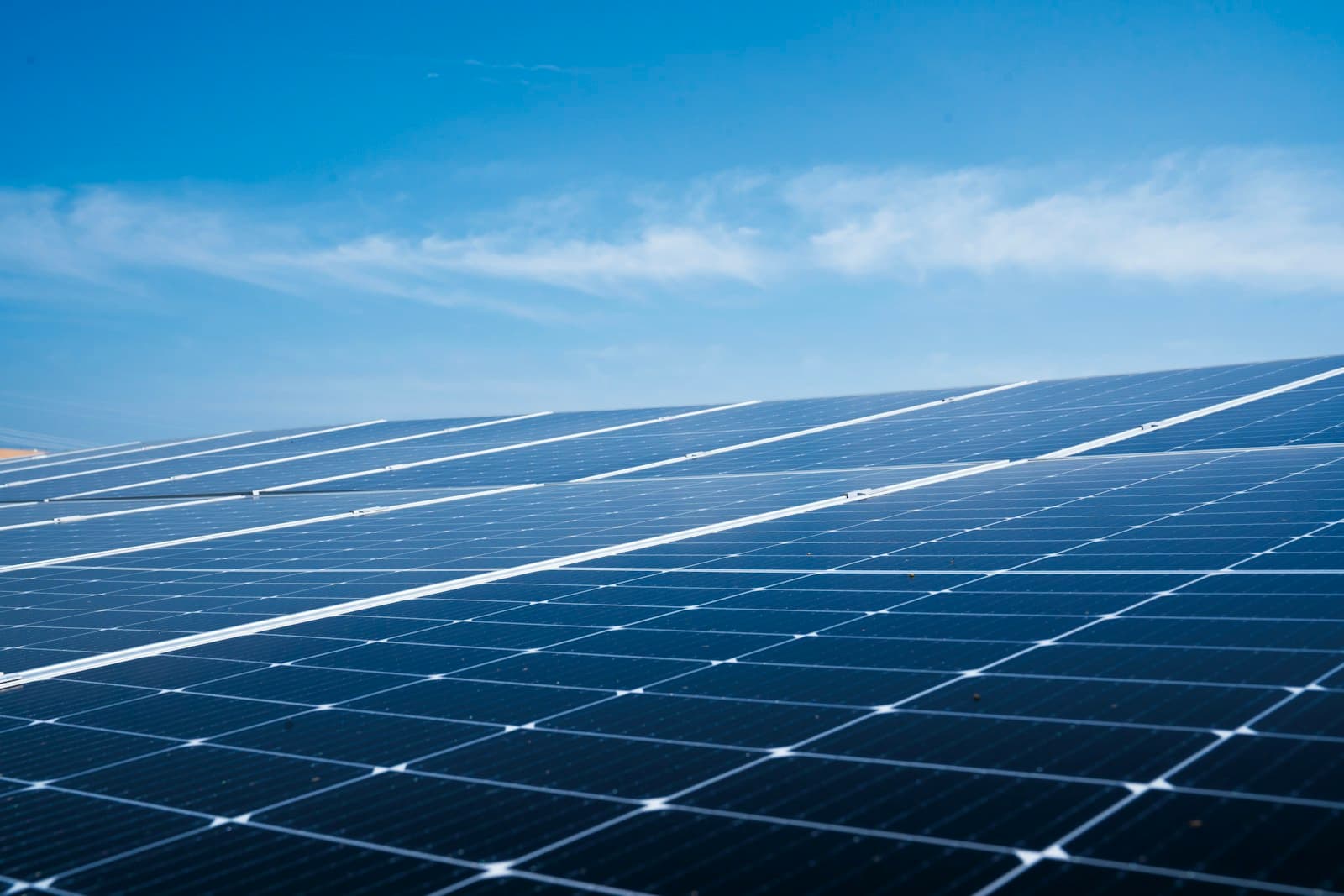
Practical guide to solar installation for industrial facilities in Thailand. Covers on-grid vs hybrid vs off-grid systems, 50kWp ROI example, NEM buyback rates 2026, IEC standards checklist, and MEA/PEA approval process.
Thai Factories Can Cut Electricity Bills 30–60%. Most Haven't.
Industrial electricity tariffs in Thailand average ฿4.50–5.50 per kWh depending on voltage level and TOU pricing. A small-to-medium factory using 40,000 kWh per month pays ฿180,000–220,000 in electricity — every month.
A 50 kWp rooftop solar system generates approximately 6,500 kWh per month under Thai solar conditions, reducing that bill by ฿29,000–36,000 monthly. Installed cost: ฿1.5–2.0 million. Simple payback: 4–6 years. System life: 25–30 years.
For a 10-year period, that's ฿3.5–4.3 million in electricity savings from a one-time capital investment. The reasons most factories haven't acted: uncertainty about roof structure requirements, confusion about MEA/PEA approval, or overestimating complexity. This guide addresses all three.
Three System Types: Which Fits Your Facility?
On-grid (Grid-tied) Solar
The system connects directly to MEA or PEA supply. Power produced reduces your grid consumption in real-time; excess is exported under the NEM program.
Pros: Lowest installed cost, fastest payback, no batteries to replace, zero-maintenance inverters last 10–15 years. Cons: No backup power during grid outages. Production only during daylight hours. Best for: Day-shift factories (6 AM–6 PM operation), facilities in stable grid areas.
Hybrid Solar (Grid-tied with Battery)
Same as on-grid, but battery storage captures surplus generation for use at night or during outages.
Pros: 24-hour solar usage, backup power during blackouts, better self-consumption rate. Cons: Installed cost 40–60% higher than on-grid. Batteries require replacement every 8–12 years (adds ฿300,000–600,000 to lifecycle cost). Best for: Cold chain facilities, data centers, hospitals, facilities with frequent outages.
Off-grid Solar
Fully independent from MEA/PEA grid. All power generated and stored on-site.
Pros: Works where grid power is unavailable. Cons: Very high cost, large battery banks, not practical for significant industrial loads. Best for: Remote monitoring stations, agricultural equipment in isolated areas.
For typical Thai factories and warehouses: on-grid delivers the best ROI in almost every scenario.
Installation Process: From Decision to Commercial Operation
Step 1: Site Survey (1–2 days) Roof structure assessment (material, slope, orientation, age), load profile analysis from past 12 months of electricity bills, preliminary system design.
Step 2: Engineering Design + MEA/PEA Submission (2–4 weeks) Formal electrical drawings, structural calculations (DPT 1311 wind load), application to MEA (Bangkok/Nonthaburi/Samut Prakan) or PEA (all other provinces). PEA approval: 2–4 weeks. MEA: sometimes longer.
Step 3: Installation (3–7 days) Mounting structure on roof, panel layout, inverter and main distribution board connection, cable management.
Step 4: Inspection and Testing (1–2 days) MEA/PEA inspector verifies compliance. Inverter anti-islanding function tested per IEC 62116 (mandatory — protects utility linemen during grid outages).
Step 5: Bidirectional Meter Installation + Commercial Operation NEM meter installed. System begins offsetting import and exporting surplus. Monitoring app activated.
50 kWp On-grid System: Real ROI Example
| Item | Value |
|---|---|
| System size | 50 kWp |
| Approximate panel count | 100–125 panels |
| Roof area required | ~300–400 m² |
| Total installed cost | ฿1,500,000 – 2,000,000 |
| Monthly generation (Thailand avg.) | ~6,500 kWh |
| Monthly bill reduction (@ ฿5.00/kWh) | ~฿32,500 |
| Annual savings | ~฿390,000 |
| Simple payback period | 4–5 years |
| Panel warranty | 25 years (linear power output) |
| Net savings over 20 years (post-payback) | ฿5–7 million |
Actual figures depend on facility tariff type (TOU/flat rate), roof orientation, shading, and self-consumption ratio.
NEM Thailand 2026: What You Get for Selling Back
Under the Net Energy Metering (NEM) program, MEA and PEA purchase surplus solar generation at a fixed rate:
- MEA (Bangkok, Nonthaburi, Samut Prakan): ~฿2.20/kWh buyback
- PEA (all other provinces): ~฿2.20/kWh buyback
Since the buyback rate is significantly lower than the purchase rate (~฿5/kWh), maximizing self-consumption delivers far better returns than exporting. A well-designed system should target 80%+ self-consumption. Sizing the system to match actual daytime load — not maximum roof capacity — is the correct approach.
For the full MEA/PEA grid interconnection process and anti-islanding (IEC 62116) requirements, see MEA/PEA Grid Interconnection & Anti-Islanding — NEM Solar Thailand 2026.
Standards and Compliance Checklist
| Standard | What It Covers |
|---|---|
| IEC 61215 | PV panel electrical performance and durability |
| IEC 61730 | PV panel fire safety and electrical safety (fire rating Class C minimum for rooftop) |
| IEC 61727 | Grid connection interface specifications |
| IEC 62116 | Anti-islanding protection (mandatory for grid connection approval) |
| DPT 1311-50 | Wind load on mounting structures (Thai standard — essential for roof warranty) |
| MEA/PEA Grid Code | Protective relays, cable sizing, breaker ratings, earthing |
Installations that do not comply with IEC 62116 will not receive MEA/PEA connection approval. Installations that ignore DPT 1311 wind load requirements may void building insurance.
Pre-installation Checklist
Roof structure:
- What is the roof material? (Concrete slab, steel deck, corrugated metal)
- Age of roof structure — anything over 15 years should be structurally assessed before adding ~12–15 kg/m² of panel load
- Roof orientation — south-facing is optimal; east/west acceptable at 10–20% reduced yield
Electrical system:
- Main breaker capacity — does it allow bidirectional flow?
- Distribution board condition — can it accept a solar feed-in breaker?
- Available space for inverter and protection equipment
Load profile:
- Download half-hourly demand data from MEA/PEA or read from smart meter
- Identify peak load hours — system should be sized to cover the majority of daytime peak
- Facilities running primarily night shifts have lower ROI from on-grid solar
Why Installer Selection Matters
Rooftop solar on an industrial building involves structural, electrical, and regulatory risks. An incorrectly designed system can void building insurance, fail MEA/PEA inspection, or create fire hazards from improper cable management. The long payback period means a poor installation choice compounds over decades.
Sahawatthanakit (1988) has provided industrial engineering services in Central Thailand for over 38 years. Our team manages the full process from site survey through MEA/PEA approval to commissioning.
Free site survey: 02-096-2118 | 061-541-6939 Sahawatthanakit (1988) Co., Ltd. — Nonthaburi (serving Bangkok metro area) Request a Solar Quote →
Get this guide as a reference brief (PDF)
Summary + full section list + standards cited, Saha-branded for your memo/RFQ — emailed to you too.
Questions after reading? Talk to our engineers
Tell us what you need — our engineers help you spec it right, with a real quote. No charge.
Need help with this in your facility?
Our team handles full procurement and installation for the topics covered in this article. Free quote within 2 hours.
Another line of ours — spreadsheet tools for SMEs
Job Costing & Pricing Calculator (Thai + English editions)
For work sold as jobs — enter materials, on-site hours and freight, and get the cash floor, the break-even, and the price you should quote.
Comparison tables related to this article
Related content
Solar Rooftop Factory Permits Thailand 2026
The latest guide to permitting a factory rooftop solar system in Thailand. After the 2024 ministerial regulation removed the RG.4 factory license, three steps remain: ERC license exemption (1,000 kVA threshold), building modification permit (160 sq.m threshold), and PEA/MEA grid interconnection under zero-export — with real documents and timeline.
Factory Rooftop Solar: CAPEX vs PPA vs Leasing — Which Investment Model Wins
A decision-ready comparison of the three rooftop-solar investment models for Thai factories: CAPEX (own it outright, one-time payment, 4–6 year payback, claim BOI + depreciation), PPA (developer funds it free, you buy the power at 20–40% below grid for 10–25 years, zero capex), and Leasing (fixed monthly payment, you keep all the power). Includes a side-by-side comparison table, a 10-year cash-flow example for a 100 kWp system, 5 deciding factors (budget/tax/roof ownership/risk/time horizon), and the 6 PPA contract clauses to read before signing (escalation, buyout, REC/carbon credits, performance, building-sale transfer) per ERC/BOI/MEA and TFRS 16.
Is Your Factory Solar Producing What You Paid For? — Performance Ratio (IEC 61724) & the O&M That Keeps It
An installed solar system can quietly underproduce by 10-20% from soiling, inverter faults, or PID. How to measure system health with Performance Ratio per IEC 61724-1, Thailand's specific-yield benchmark, why output drops, and the O&M that protects it — cleaning, IR thermography, IV-curve testing, monitoring.
Is a BESS Worth It for Factory Solar? — Peak-Shaving Demand Charges & Capturing Zero-Export Surplus in Thailand
Factory solar overproduces at midday but can't export (zero export), so the surplus is wasted. A BESS stores it for evening and shaves the demand charge that is 30-50% of your bill. A decision guide: the 3 ways a BESS saves money, how to size it (kWh vs kW, DoD), real costs and payback, referencing Thai industrial TOU rates 2026.