
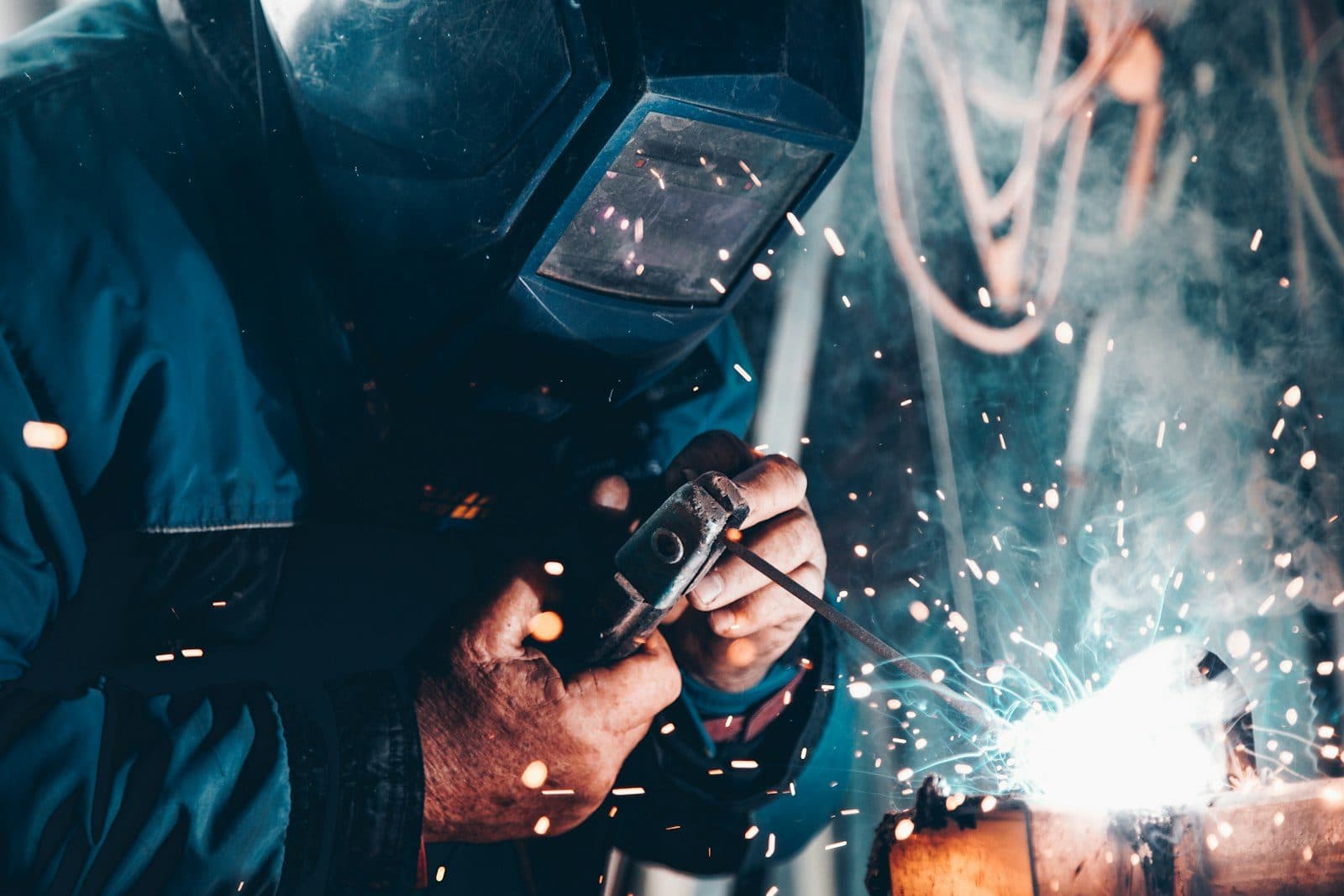
550°C, 1000°C or 1260°C? An engineer's guide explaining the differences between fiberglass, silica, and ceramic fire blankets — with a selection table by welding process, EN 1869 / NFPA 701 standards coverage, and common sizes used in Thai industry.
A cheap 500-baht fiberglass blanket and a 5,000-baht ceramic blanket serve completely different purposes. Use the wrong one and you either get zero fire protection or waste money on unnecessary spec. This guide helps you choose correctly the first time.
Why Grade Selection Matters
Each type of welding fire blanket has a specific maximum continuous use temperature — and when exceeded, the material doesn't just stop protecting; it can melt, combust, or release fibers, creating a hazard worse than no blanket at all.
Three-Way Comparison
| Material | Max Temp | SiO₂% | Weight | Price (relative) | Best for |
|---|---|---|---|---|---|
| Fiberglass | 550°C | ~55% | 600–1,000 g/m² | Economy | MIG/MAG, grinding, general use |
| Silica | 1,000°C | >96% | 800–1,200 g/m² | 2–3× fiberglass | TIG/heavy arc, foundry, oxy-fuel |
| Ceramic fiber | 1,260°C | Al₂O₃+SiO₂ | 800–1,100 g/m² | 4–6× fiberglass | Furnace curtains, kilns, continuous high-temp |
Fiberglass — 550°C
Material: woven E-glass fiber, optionally coated with vermiculite, silicone, or PTFE.
Choose plain fiberglass when:
- General MIG/MAG welding
- Grinding, drilling, cutting in the factory
- Protecting floors and adjacent equipment from weld spatter
- Wide area coverage needed at low cost
Choose vermiculite-coated fiberglass when:
- Stick (SMAW/FCAW) welding with heavy slag — vermiculite absorbs slag and prevents burn-through
- Welding in confined spaces where heavier blankets are needed
Choose silicone-coated fiberglass when:
- Oil or chemical splash is present alongside sparks
- Hydraulic system maintenance, oil line work
Choose PTFE-coated fiberglass when:
- Food, pharmaceutical, or clean room environments — PTFE doesn't shed particles and cleans easily
Hard limit: Fiberglass cannot withstand direct slag contact — if a glob of molten slag lands directly on it, it will burn through. Upgrade to silica or ceramic if this applies.
Silica Cloth — 1,000°C
Material: woven fabric from silica fiber with SiO₂ content >96% — dramatically higher than standard E-glass fiberglass (~55% SiO₂).
Use silica cloth when:
- TIG (GTAW) welding — high arc temperature zone
- High-amperage stick welding (SMAW)
- Oxy-acetylene / oxy-fuel cutting — red flame zone >800°C
- Foundry work — molten metal spatter
- Pipe blanket wrapping around weld joints
Advantages over fiberglass:
- Withstands direct slag impact significantly better
- Lower thermal shrinkage under heat
- Flexible enough to wrap curved pipe sections
Ceramic Fiber Cloth — 1,260°C
Material: twisted aluminum silicate fiber — Al₂O₃ (40–60%) + SiO₂ (40–60%) — composition varies by application classification (ASTM C892 Grade 8 through Grade 24).
Use ceramic fiber when:
- Furnace curtains operating at 1,000–1,260°C continuously
- Kiln doors and openings — repeated thermal cycling
- Induction furnace protective barrier against spatter
- Any application requiring sustained radiant heat resistance (not just sparks)
Bio-soluble Ceramic (BSC) — 1,260°C: Ceramic fiber engineered to dissolve rapidly in lung fluid, reducing respiratory health risk. Recommended per IARC Group 2B classification of conventional RCF (refractory ceramic fiber):
- Applications where workers handle fibers frequently at close range
- Facilities with an RCF-free materials policy
- Furnace maintenance requiring frequent removal and reinstallation
Selection Table by Welding Process
| Process / Application | Recommended grade |
|---|---|
| MIG/MAG (GMAW) general | Fiberglass 550°C |
| Stick (SMAW) high amperage | Silica 1,000°C or Vermiculite FG |
| TIG (GTAW) on stainless pipe | Silica 1,000°C |
| Oxy-fuel cutting | Silica 1,000°C |
| Plasma cutting | Silica 1,000°C |
| Foundry / molten metal | Silica 1,000°C → Ceramic 1,260°C |
| Furnace curtain / kiln door | Ceramic 1,260°C |
| Furnace curtain (frequent handling) | Bio-soluble ceramic 1,260°C |
| Floor/equipment spark protection | Fiberglass 550°C (cost-effective wide coverage) |
| Food / pharma environment | PTFE-coated fiberglass |
Available Sizes and Standards
Standard stock sizes:
- 1m × 1m (cut from roll)
- 1m × 2m
- 2m × 2m
- 1m wide rolls × custom length (up to 50m per roll)
- Custom cut to project dimensions — shaped cuts available on order
Standards compliance:
- EN 1869:2019 — fiberglass, silica
- NFPA 701:2019 — fiberglass, silica
- ASTM E2307 — silica
- ASTM C892 — ceramic fiber
- OSHA 1910.252 compliant — all grades
Condition Check Before Use
Fire blankets have no fixed expiry date, but inspect before each use:
- Replace immediately if a slag burn has created a hole
- Replace immediately if the blanket has become brittle or is crumbling
- Replace if the blanket has repeatedly caught direct slag (invisible contamination buildup)
- Still usable if stored dry, properly folded, with no physical damage
Order and Enquiry
Not sure which grade your application needs? Tell us the welding process / temperature + size & quantity + delivery location and get a quote within 24 hours — our engineering team recommends the correct spec before you order.
- Request a quote online: open the form (spec goes straight to our engineers) →
- Direct line: 02-096-2118 / 061-541-6939 (Khun Chin)
- LINE OA: @sahawatt1988
- Email: info@sahawatthanakit1988.com
- Mon–Fri 08:00–17:00 · nationwide delivery
Get this guide as a reference brief (PDF)
Summary + full section list + standards cited, Saha-branded for your memo/RFQ — emailed to you too.
Questions after reading? Talk to our engineers
Tell us what you need — our engineers help you spec it right, with a real quote. No charge.
Need help with this in your facility?
Our team handles full procurement and installation for the topics covered in this article. Free quote within 2 hours.
Another line of ours — spreadsheet tools for SMEs
Quote Register + Win Rate (Thai + English editions)
For quotes that go silent — one row per quote, telling you which to chase today and what your real win rate is.
Comparison tables related to this article
Related content
Welding Fire Blanket Selection — Fiberglass 550°C vs Silica 1000°C vs Ceramic 1260°C (What Temperature to Choose)
Buyer's guide to selecting welding fire blankets by working temperature — fiberglass (550°C) vs silica (1000°C) vs ceramic fiber (1260°C), plus Vermiculite/silicone/aluminised coatings against EN 1869, NFPA 701, OSHA 1910.252, and AWS F4.1.
Welding Blanket Grade Selection — Spatter / Slag / Molten Metal Scale by Application
Select a welding blanket by welding process (MIG/MAG/TIG/Arc/Plasma/Oxy-fuel) — spatter, slag, molten-metal heat load — standards EN 1869, NFPA 701, ASTM E2307, FM 4950 — comparing fiberglass 550°C, silica 1000°C, ceramic 1260°C.
Welding Blankets — Prices and Suppliers in Thailand 2026 — Fiberglass / Silica / Ceramic
Compare the prices of 3 types of welding blanket in Thailand 2026, with a property table, how to choose by application, and standard-compliant suppliers meeting EN 1869 and FM4950
Fire Watch Duration After Hot Work — OSHA 30 Minutes vs NFPA 51B 60 Minutes
Why fire watch requirements after hot work say both 30 and 60 minutes — comparing OSHA 1910.252 / 1915.504 / 1926.352 against NFPA 51B's 60-minute watch plus up to 3 hours of fire monitoring.