
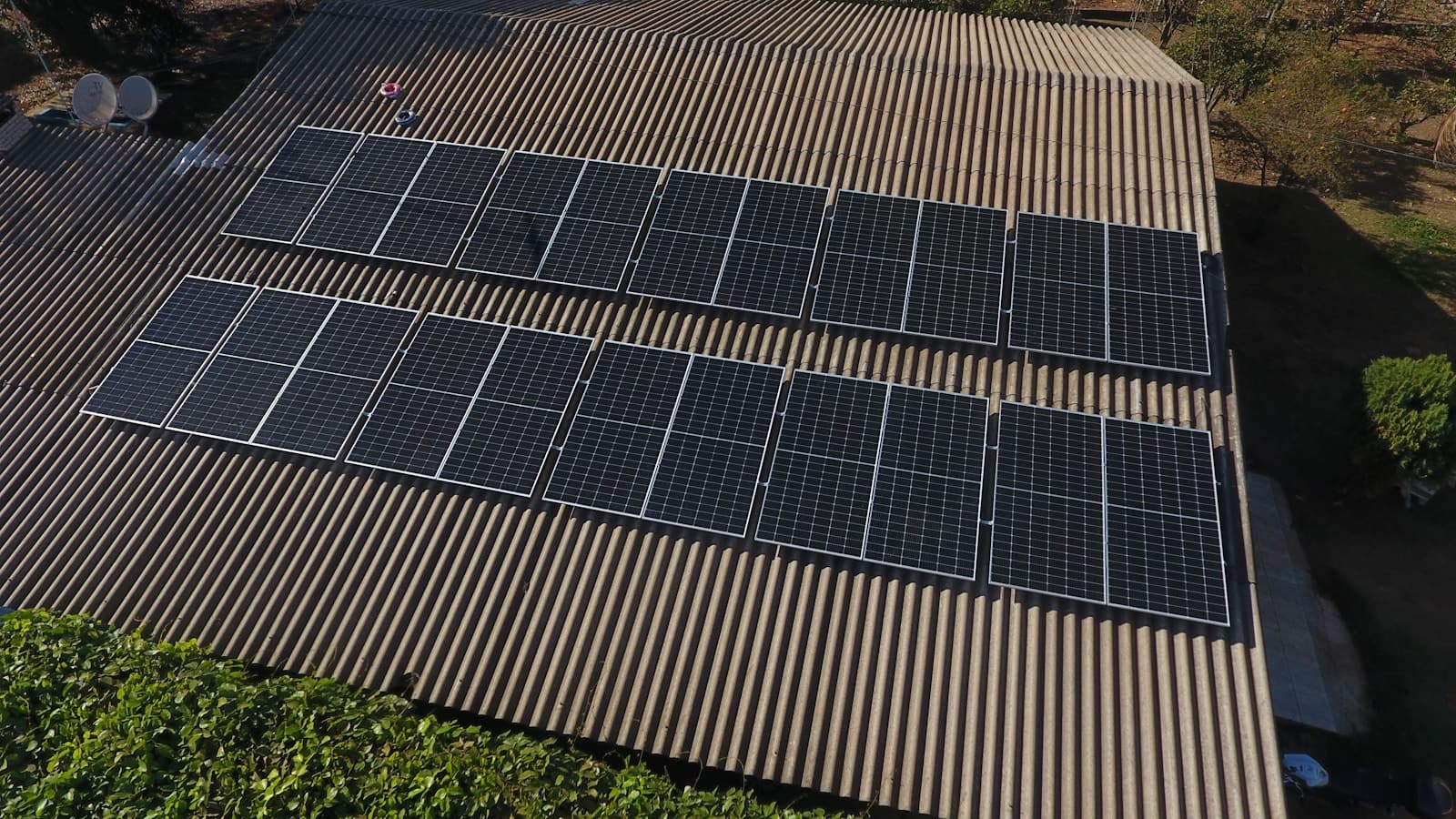
A deep look at the degradation mechanisms that push solar panels past spec, especially in Thai conditions (heat + humidity + high voltage): LID, PID, LeTID, thermal cycling, microcrack/hotspot — with how to prove real degradation using IV curve flash test, EL (electroluminescence) imaging, IR thermography and Performance Ratio monitoring, PID prevention, and the evidence needed to claim warranty per IEC 61215 / IEC TS 62804.
Factory solar systems cost millions and are expected to last 25-30 years — but panels don't degrade in the neat straight line shown in brochures. There are specific mechanisms that accelerate degradation past spec, especially in Thailand's hot, humid conditions.
This article builds on How to choose Solar panels meeting IEC 61215 / IEC 61730, which covers "acceptable degradation rates" — here we go deeper: why panels degrade (the mechanisms) and how to measure/prove/claim it.
1. Panels Degrade via 5 Mechanisms — Not Just "Age"
flowchart TD
    M["PV Degradation"] --> A["LID
Light-Induced"]
    M --> B["PID
Potential-Induced"]
    M --> C["LeTID
Light + elevated Temp"]
    M --> D["Thermal/UV
cycling + EVA browning"]
    M --> E["Microcrack/Hotspot
mechanical/install"]
    B --> note["Biggest problem in Thailand
(heat+humidity+high voltage)"]| Mechanism | Cause | Character |
|---|---|---|
| LID | First light exposure | ~1-3% loss in first hours/days, then stable |
| PID | High voltage + humidity | Accumulates over time, up to 20-30% — partially recoverable |
| LeTID | Light + high heat | Slow loss, prominent in PERC cells + hot climates |
| Thermal/UV | Hot-cold cycles + UV | EVA browning, delamination, solder/wire fatigue |
| Microcrack/Hotspot | Transport/install/hail stress | Cell cracks → hotspot → spreads |
2. PID — Why Thailand Is Hit Especially Hard
PID (Potential-Induced Degradation) is charge leakage from a high potential difference between cells and the frame/ground. Thailand accelerates PID by combining three factors at once:
- High heat — speeds Na-ion migration in the glass/EVA
- High humidity — creates a charge-conducting path on the panel surface
- High DC system voltage — factory installs often run strings at 1000-1500V, giving panels at the string ends a large potential difference to ground
Preventing PID:
- Choose panels rated PID-resistant (passing IEC TS 62804)
- An inverter with an anti-PID / PID-recovery function (reverse voltage at night to recover)
- Functional grounding per the manufacturer's instructions
- Design string voltage within rating + avoid trapped humidity at panel edges
The upside of PID: unlike permanent degradation, PID is partially recoverable if the root cause is fixed in time — so early detection matters.
3. Measuring/Proving Real Degradation — 4 Tools
The classic problem: you know output dropped, but you can't prove it degraded "beyond spec" → you can't claim the warranty. You need quantitative evidence:
flowchart LR
    A["IV Curve
flash test"] --> P["compare to baseline
commissioning"]
    B["EL Imaging
(electroluminescence)"] --> P
    C["IR Thermography
find hotspots"] --> P
    D["Performance Ratio
(PR) monitoring"] --> P
    P --> CLAIM["evidence to claim
power warranty"]| Tool | What it shows | Standard |
|---|---|---|
| IV curve flash test | actual output vs rated → degradation % | IEC 60904 |
| EL imaging | microcracks, dead cells, PID pattern (B/W image) | IEC 60904-13 |
| IR thermography | hotspots, abnormal cells (thermal image) | — |
| Performance Ratio (PR) | whole-system efficiency vs theory, over time | IEC 61724 |
Key: you must have a commissioning baseline (first IV + EL at handover) — otherwise you can't prove "degraded from what."
4. Claiming the Power Warranty — What You Need
Panels carry two warranties: product warranty (materials/workmanship ~10-15 years) and power output warranty (guaranteeing output ≥80% at year 25). Claiming the power warranty requires proving degradation beyond the guarantee:
- Baseline flash test report at installation (kept from day one)
- Current IV curve at standard conditions → measured degradation %
- EL image showing internal damage (microcrack/PID)
- PR data from the monitoring system confirming the trend
No baseline = very hard to claim. The manufacturer will argue low output came from installation/environment, not the panel itself.
5. Reduce Degradation With Correct O&M
flowchart TD
    Q1{What to inspect} --> A["Commissioning:
EL + IV baseline"]
    Q1 --> B["Annual: PR trend
+ IR hotspot scan"]
    Q1 --> C["Before warranty expiry:
EL + IV to claim degraded panels"]
    A --> R["Protect the 25-year investment"]
    B --> R
C --> R- Commissioning: capture EL + IV baseline + catch transport/install cracks from the start
- Clean soiling on schedule (dust/bird droppings cut output + create hotspots)
- Monitor PR to catch anomalies early (especially recoverable PID, if caught in time)
- EL/IV before warranty expiry to claim panels degraded beyond spec before the right lapses
Conclusion
Solar panels don't degrade in a straight line — mechanisms like LID, PID, LeTID, thermal/UV and microcracks accelerate degradation past spec, with PID the biggest problem in Thailand from combined heat + humidity + high voltage.
Protecting the 25-year investment requires: choosing PID-resistant panels, preventing with an anti-PID inverter + grounding, capturing a commissioning IV/EL baseline, continuously monitoring PR, and keeping complete evidence to actually claim the power warranty.
Sahawatthanakit (1988) handles survey, design, installation and O&M planning of Solar systems for factories and warehouses — our engineering team builds in PID prevention and monitoring from the design stage, so the system pays off across its full 25 years.
Get this guide as a reference brief (PDF)
Summary + full section list + standards cited, Saha-branded for your memo/RFQ — emailed to you too.
Questions after reading? Talk to our engineers
Tell us what you need — our engineers help you spec it right, with a real quote. No charge.
Need help with this in your facility?
Our team handles full procurement and installation for the topics covered in this article. Free quote within 2 hours.
Another line of ours — spreadsheet tools for SMEs
Job Costing & Pricing Calculator (Thai + English editions)
For work sold as jobs — enter materials, on-site hours and freight, and get the cash floor, the break-even, and the price you should quote.
Frequently Asked Questions
1What is PID and why is it an especially big problem in Thailand?
+
2How do LID, PID and LeTID differ?
+
3How do you prove a panel has degraded beyond spec?
+
4How do you prevent PID?
+
5When is EL imaging worthwhile?
+
Comparison tables related to this article
Related content
Factory Rooftop Solar: CAPEX vs PPA vs Leasing — Which Investment Model Wins
A decision-ready comparison of the three rooftop-solar investment models for Thai factories: CAPEX (own it outright, one-time payment, 4–6 year payback, claim BOI + depreciation), PPA (developer funds it free, you buy the power at 20–40% below grid for 10–25 years, zero capex), and Leasing (fixed monthly payment, you keep all the power). Includes a side-by-side comparison table, a 10-year cash-flow example for a 100 kWp system, 5 deciding factors (budget/tax/roof ownership/risk/time horizon), and the 6 PPA contract clauses to read before signing (escalation, buyout, REC/carbon credits, performance, building-sale transfer) per ERC/BOI/MEA and TFRS 16.
Can Your Factory Roof Take Solar? — Structural Load, the 20 kg/m² Rule, and Wind Uplift (มยผ. 1311) Before Installing PV
How to assess a factory roof before installing rooftop solar in Thailand: the dead load a PV system adds (panel + rails + ballast), the 20 kg/m² legal threshold (2023 ministerial regulation exempting it from a building-modification permit), the real weak point of metal-sheet roofs (purlins + fixings) vs concrete decks, wind uplift per มยผ. 1311-50 / AS-NZS 1170, and the checklist a licensed civil engineer must sign off.
String vs Central vs Micro Inverter + Power Optimizer — Choosing Solar Inverter Architecture
Comparing four solar inverter architectures for Thai factory roofs and commercial buildings: string inverter, central inverter, microinverter and power optimizer (DC optimizer) — covering MPPT granularity, shading/mismatch tolerance, panel-level monitoring, rapid-shutdown safety, cost per watt, maintenance, standards IEC 62109 / IEC 62116 anti-islanding, and how to match the architecture to the job.
Solar Carport Structure Design — Wind Load Engineering per Thai DPT / AS/NZS 1170
A design guide for solar carport structures for Thai factories and commercial buildings — focused on wind uplift as the critical load, standards มยผ. 1311 (DPT) / AS/NZS 1170.2 / ASCE 7, balancing tilt angle against wind, vehicle clearance + EV charger, hot-dip galvanized steel for corrosion, foundations that resist overturning, and the building permit (Aor.1) + licensed-engineer sign-off requirement.