






Sahawatthanakit (1988) Co., Ltd.
SAHAWATTHANAKIT(1988) · Make It Smart
Back to all articles
Sahawatthanakit (1988) Engineering Team6 min read

Hydraulic Oil ISO VG 32 vs 46 vs 68: Key Differences + Grade Selection Table 2026

Comparing hydraulic oil ISO VG 32 / 46 / 68 — viscosity grades, which machinery each suits, operating temperature ranges, drain intervals, and ISO 6743-4 / DIN 51524 standards for Thai factories

lubricanthydrauliciso-vgdin-51524iso-6743
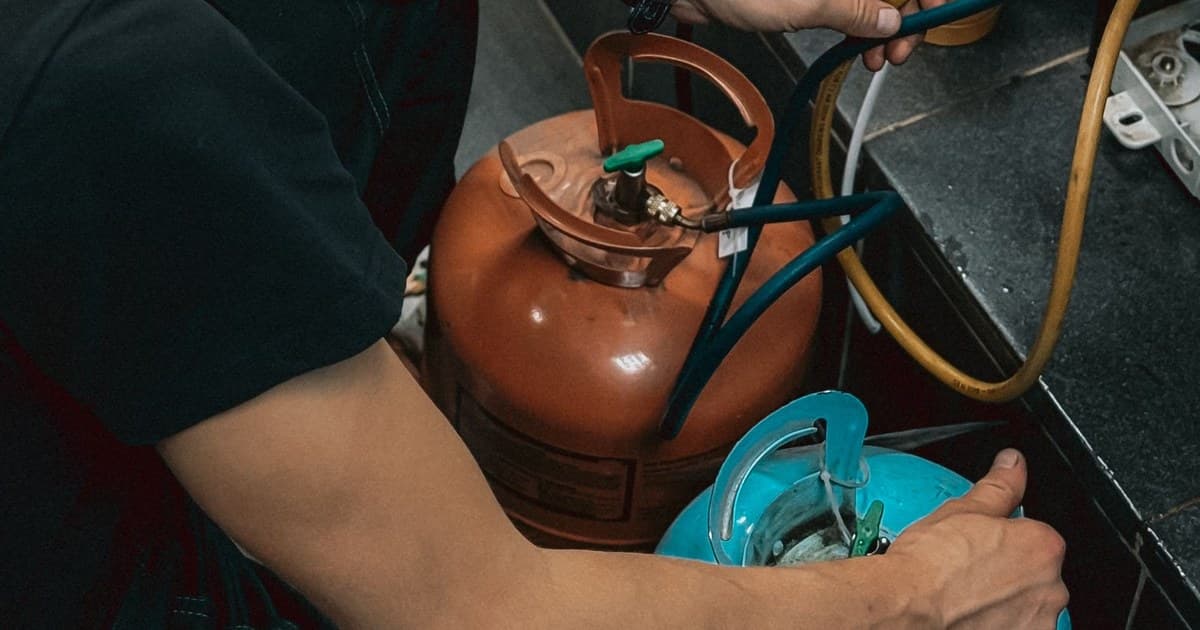
Hydraulic system on industrial machinery — comparing ISO VG 32 vs 46 vs 68 hydraulic oil

Photo by Unsplash

สรุป (TL;DR)

Comparing hydraulic oil ISO VG 32 / 46 / 68 — viscosity grades, which machinery each suits, operating temperature ranges, drain intervals, and ISO 6743-4 / DIN 51524 standards for Thai factories

Most industrial hydraulic systems in Thailand default to ISO VG 46 — but that does not mean it is right for every machine. Servo precision systems require VG 32, and high-pressure hydraulic presses need VG 68. Using the wrong grade causes accelerated pump wear, reduced efficiency, faster oil oxidation, and significantly higher long-term costs. This article interprets ISO 6743-4, DIN 51524, and ISO 3448 with a grade selection table based on actual machinery types.

ISO VG Classification — Understanding the System

ISO 3448:1992 divides industrial lubricants into 18 grades by their midpoint viscosity at 40°C:

Grade Midpoint (cSt @ 40°C) Range (±10%) Common in Thailand?
VG 22 22 19.8–24.2 Servo precision, cold climates
VG 32 32 28.8–35.2 ✓ Servo, machine tools
VG 46 46 41.4–50.6 ✓✓ Industrial standard
VG 68 68 61.2–74.8 ✓ Heavy presses, high pressure
VG 100 100 90–110 High temp, mining
VG 150+ 150+ Gear oil, large gearboxes

Most hydraulic systems use VG 22–100. Gearbox systems use VG 150+.

Viscosity Grade Selection Flowchart

flowchart TD
  A[Hydraulic system] --> B{Ambient operating
temperature?} B -->|< 10°C cold| C[VG 32 or lower] B -->|10–40°C normal| D{Operating pressure?} B -->|> 50°C hot| E[VG 68 or Synthetic] D -->|< 100 bar| F[VG 32] D -->|100–250 bar| G[VG 46
International standard] D -->|> 250 bar| H[VG 68] C --> I{Pump type?} F --> I G --> I H --> I E --> I I -->|Servo precision| J[Select VG one step lower
+ HVI ≥ 140] I -->|Standard gear/vane/piston| K[Use grade from table] I -->|Old / worn equipment| L[Select VG one step higher] J --> M[Follow OEM spec
as the primary guide] K --> M L --> M

Performance Comparison at Real Operating Conditions

Property ISO VG 32 ISO VG 46 ISO VG 68
Viscosity @ 40°C (cSt) 32 46 68
Viscosity @ 100°C (cSt) 5.4 6.8 8.7
Viscosity Index (mineral) 100 100 100
Optimal operating range -10 to 60°C 0 to 80°C 10 to 100°C
Pressure rating < 150 bar < 250 bar > 250 bar
Pump efficiency at 50°C Highest High Moderate
Cold start torque Lowest Low High
Price relative to VG 46 = 100% 95–100% 100% 100–110%

Pump efficiency drops approximately 1–2% for every 10°C above the optimal operating temperature — this matters significantly over the long term.

ISO 6743-4 — Classification by Additive Package

In addition to viscosity grade, ISO 6743-4 also classifies hydraulic oils by their additive characteristics:

  • HH — Straight mineral oil, no additives. No longer used in industry.
  • HL — Anti-rust + anti-oxidation. Systems without high-pressure pumps.
  • HM (= HLP in DIN 51524 Part 2) — HL + anti-wear (ZnDDP). Current standard for industrial hydraulic systems.
  • HV — HM + Viscosity Index Improver (HVI). Mobile equipment, outdoor use.
  • HG — Anti-stick-slip additive. Slideway oil for machine tools.
  • HEPG / HETG / HEPR / HEES — Biodegradable, environmentally acceptable fluids.
  • HFC / HFB / HFA / HFD — Fire-resistant fluids (steel mills, spark-free environments).

The standard in Thailand is HM (HLP) VG 46. This grade meets:

  • Anti-wear test ASTM D6973 (Vickers V104C pump test)
  • FZG gear wear ≥ Stage 11
  • Oxidation stability ASTM D943 ≥ 2,000 hours

Hydraulic Oil Degradation — Warning Signs and Causes

Sign Cause Corrective Action
Dark black/brown colour Oxidation, overheating Reduce operating temperature + inspect cooler + drain and refill
Milky white appearance Water contamination Inspect seals + install desiccant breather
Burnt smell Thermal degradation Reduce pump pressure + reduce cycle frequency
Foam / air bubbles Air ingress, low oil level Top up + inspect suction strainer
Acid number > 0.5 Late-stage oxidation Drain and replace immediately
Particle code worse than 21/19/16 Wear debris, contamination Install bypass filter 3–10 micron

ISO 4406 particle count reference levels:

  • 18/16/13 — Suitable for servo systems, high precision
  • 20/18/15 — Suitable for standard industrial pumps
  • 22/20/17 — Suitable for heavy-duty applications (mining, construction)
  • Worse than 22/20/17 — Drain and refill + flush the system

Cooling and Filtration — As Important as the Oil Grade

A hydraulic system running VG 46 at its best requires:

  • Heat exchanger — Maintain oil temperature at 40–50°C (optimal range; do not allow to exceed 70°C)
  • Reservoir size — At least 3–5 times the pump flow per minute (allowing dwell time for heat dissipation and air bubble separation)
  • Filtration — 10-micron return line filter + 3-micron bypass filter for servo systems
  • Desiccant breather — Prevent moisture entering the reservoir through the breather cap

Oil service life depends on these three factors more than the viscosity grade itself. A properly maintained system with a good cooler and good filtration can run VG 46 for 3–5 years or more.

6 Procurement Guidelines

  1. Specify ISO 6743-4 HM/HV + ISO VG + DIN 51524 Part 2 in the TOR — all three standards should be referenced together.
  2. Anti-wear ASTM D6973 V104C ≥ 50,000 cycles — mandatory for equipment running more than 1,000 hours per year.

  3. VI ≥ 140 HVI for mobile or outdoor systems — mineral VI of 95–105 is insufficient.
  4. Compatibility test before switching brands — mix 50:50 + heat to 90°C for 168 hours; inspect for sludge or separation.
  5. MSDS + COA as official documents — with full spec and lot number for every batch.
  6. Oil analysis service — a supplier that provides complimentary laboratory analysis is a valuable long-term partner.

Summary

ISO VG 46 is the international standard for industrial hydraulic systems in Thailand — suitable for most machinery operating at 10–40°C ambient with pressure up to 250 bar. VG 32 suits servo precision systems or cold environments. VG 68 suits high-pressure systems above 250 bar or elevated operating temperatures. HM/HLP additive package is the current standard — it must pass ASTM D6973, FZG ≥ 11, and ISO 4406 particle count per system requirements. Drain interval is 2,000–4,000 hours, but annual oil analysis is more cost-effective than scheduled draining.


Sahawatthanakit supplies HLP hydraulic oil in VG 32/46/68 grades from SK ZIC, complete with COA and complimentary oil analysis service for fleet customers. Contact our team for advice based on your actual equipment.

Frequently Asked Questions

What do the ISO VG grades mean? Viscosity Grade at 40°C per ISO 3448. VG 32 = 28.8–35.2 cSt, VG 46 = 41.4–50.6 cSt, VG 68 = 61.2–74.8 cSt. Higher number = higher viscosity.

Can VG 46 be used in most machinery? Generally yes — it is the international standard for industrial systems at 20–40°C ambient. Default specification for Bosch Rexroth, Parker, Eaton, and Vickers equipment.

When should VG 32 be used? Cold conditions below 10°C, servo precision systems, high-speed applications. Do not use at pressures above 200 bar — insufficient film strength will cause pump wear.

When should VG 68 be used? Pressures above 250 bar, temperatures above 50°C, older equipment with worn internal clearances.

How important is VI? VI 95–105 (mineral) — viscosity drops significantly with temperature. VI 150+ (HVI/Synthetic) — stable across a wide range. Mobile/outdoor systems require VI ≥ 140.

What should the drain interval be? Normal conditions: 2,000–4,000 hours or 1–2 years. Severe conditions (above 60°C, water contamination): 1,000–2,000 hours. Run oil analysis before draining — particle code 19/17/14 + acid number below 0.5 = oil is still serviceable.

Order & Inquiries

Sahawatthanakit (1988) Co., Ltd. — Hydraulic oil and industrial lubricant supplier across Thailand, VAT invoices available.

Share:LINEFacebook
Free download · no sales call

Get this guide as a reference brief (PDF)

Summary + full section list + standards cited, Saha-branded for your memo/RFQ — emailed to you too.

Your email is used only to send the brief + contact from the Saha team · never shared.

Free consult · real quote within 2 hours

Questions after reading? Talk to our engineers

Tell us what you need — our engineers help you spec it right, with a real quote. No charge.

Or reach us directly:02-096-2118LINE: @406rrgvm
Related Services

Need help with this in your facility?

Our team handles full procurement and installation for the topics covered in this article. Free quote within 2 hours.

Frequently Asked Questions

1

What does ISO VG mean, and how do 32, 46, and 68 differ?

+
ISO VG (Viscosity Grade) is the kinematic viscosity at 40°C measured in cSt per ISO 3448. VG 32 = 28.8–35.2 cSt, VG 46 = 41.4–50.6 cSt, VG 68 = 61.2–74.8 cSt. A higher number means a heavier (more viscous) oil. Select based on operating pressure, temperature, and pump type.
2

Can VG 46 really be used in most machinery?

+
Yes — VG 46 is the international standard for industrial hydraulic systems operating at ambient temperatures of 20–40°C (which covers Thailand). Most machinery from Bosch Rexroth, Parker, Eaton, and Vickers specifies VG 46 as the default. It is compatible with all pump types — gear, vane, and piston.
3

When should VG 32 be used?

+
VG 32 is best suited for: (1) systems operating in cold conditions below 10°C — lower viscosity eases cold starting; (2) precision tools and medical equipment requiring low-pressure smooth flow; (3) high-speed servo systems. Do not use VG 32 in high-pressure systems above 200 bar — film strength is insufficient and will cause pump wear.
4

In what conditions should VG 68 be used?

+
VG 68 is appropriate for: (1) hydraulic presses and mining equipment operating at pressures above 250 bar; (2) systems continuously operating above 50°C; (3) older machinery with worn internal clearances — the heavier oil helps seal internal leakage. In Thailand it is used in steel mills, hot presses, and heavy mobile equipment.
5

How important is Viscosity Index (VI)?

+
VI measures how stable the viscosity remains as temperature changes. VI 95–105 (mineral) — viscosity drops quickly when the oil heats up. VI 150+ (Synthetic / HVI) — much more stable across a wide temperature range (-20 to 100°C). Mobile equipment and outdoor systems experiencing temperature swings of 30–50°C must use HVI ≥ 140. Indoor factory systems with stable temperatures — VI 100 is sufficient.
6

What should the drain interval be?

+
Per ISO 11158 + DIN 51524: Normal duty — 2,000–4,000 hours or 1–2 years. Severe conditions (above 60°C, water or dust contamination) — 1,000–2,000 hours. Annual oil analysis (ISO 4406 particle count + ASTM D974 acid number) is recommended before draining — if the particle code is 19/17/14 or better and acid number is below 0.5, the oil can continue in service.
Compare — buying decision

Comparison tables related to this article

Related content