
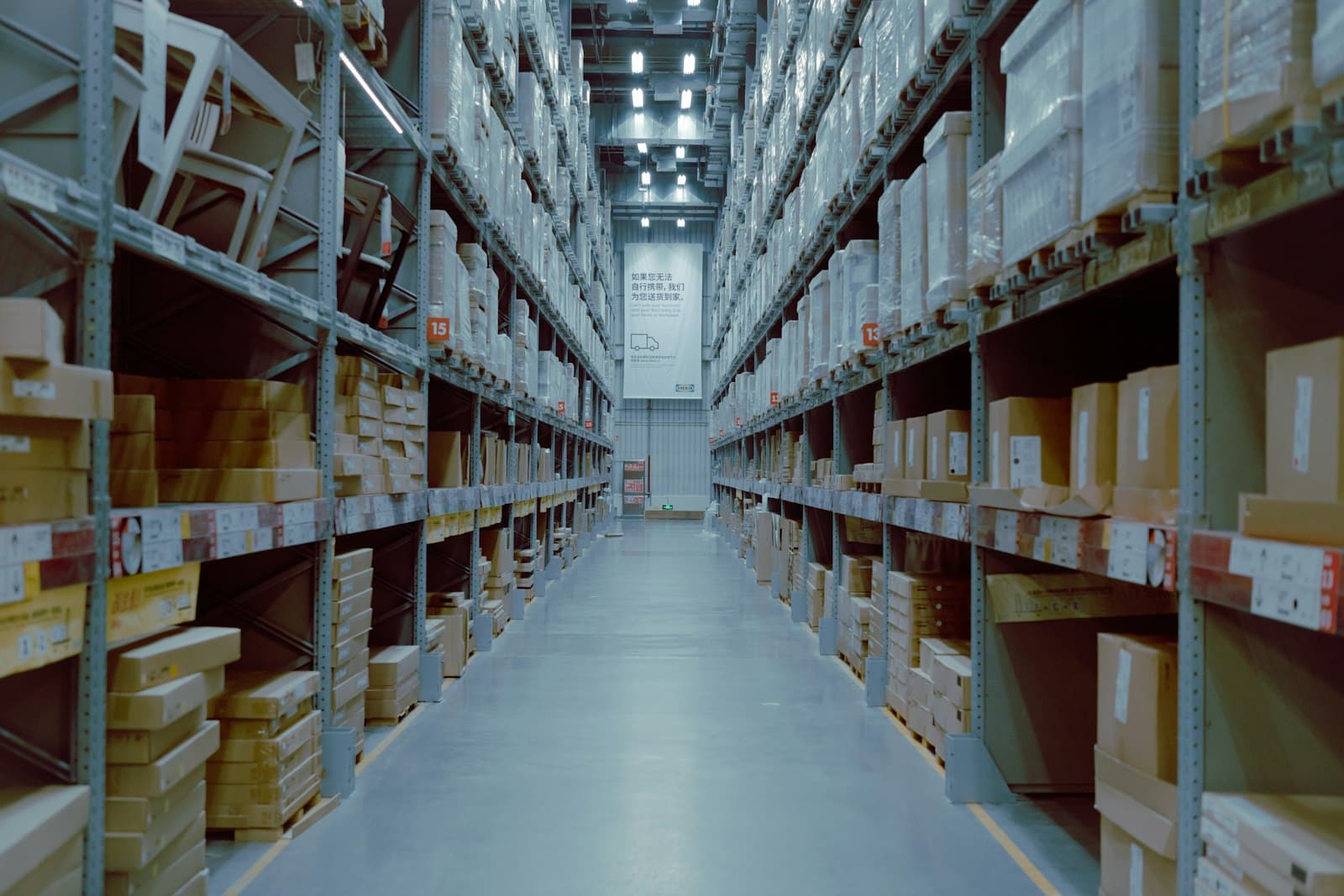
Thai contractors buy pallet racking without asking which code it was engineered to. TISI has not issued a dedicated TIS for racking systems, but the steel itself should comply with TIS 1227 / TIS 1479, and the rack as a system should follow AS 4084, EN 15512, or ANSI MH16.1. Here's how the two layers fit together.
Thai contractors buy pallet racking from many suppliers, with prices varying 30-50% for what looks like the same specification — yet few buyers ask "which design code was this rack engineered against?" or "does the steel carry a TIS mark?". The full picture: the Thai Industrial Standards Institute (TISI) has not issued a dedicated TIS for pallet racking systems, but the steel used to build the rack should comply with TIS 1227-2558 (hot-rolled structural sections) and/or TIS 1479-2558 (hot-rolled sheets). The rack as a structural system must then be designed against an international code — AS 4084, EN 15512, or ANSI MH16.1. Choosing the wrong code can mean load-capacity errors of 20-40% — a real problem when racks collapse.
Why the standard matters
Racks that look identical from the outside — H-section uprights, box-section beams, base plates, bracing — hide engineering differences invisible to the eye:
- Steel thickness (cold-formed gauge) varies between 1.5 mm and 2.0 mm
- Stub-column, base-plate, and beam-end-connector test methods are specified differently by each code
- Material reduction factor (γM) — the safety multiplier applied to the lower-bound capacity
- Seismic / impact factors — for earthquake-prone regions or high-traffic forklift aisles
If a supplier claims "this rack carries 2 tonnes per beam pair" without a test report referencing any code, that number is a marketing claim, not an engineering value.
TIS standards that apply to racks in Thailand
Although TISI has not issued a TIS for the rack system as a whole, the steel used to fabricate racks in Thailand should comply with:
- TIS 1227-2558 — Hot Rolled Structural Steel Sections covers 7 grades (SS400, SS490, SS540, etc.) classified by mechanical properties and chemical composition. Used for H/I-section uprights
- TIS 1479-2558 — Hot Rolled Steel Sheets for General Structure covers the plate steel used for beams and accessories (published in the Royal Gazette on 27 September 2016)
Reputable manufacturers will supply mill certificates citing the TIS number — these documents are accepted by ISO auditors and Thai government tenders as proof of material conformance.
The three-standard landscape for rack design
flowchart LR
  Region{"Region of use /
designer"}
  Region -->|"Europe
(strictest)"| EN["EN 15512:2020+A1:2022
γM = 1.1
test-based design"]
  Region -->|"Australia /
NZ /
Southeast Asia"| AS["AS 4084.1:2023 (Design)
AS 4084.2:2023 (Op & Maint)
annual external audit"]
  Region -->|"North America"| ANSI["ANSI MH16.1-2021/2023
RMI
9 design factors per warehouse"]
  EN --> Th["Thailand:
steel = TIS 1227 / 1479
rack system = international code
→ buyer specifies both in TOR"]
  AS --> Th
  ANSI --> Th
Comparing the three main standards
1. AS 4084:2023 (Australia) — widely used in Thailand
The Australian standard splits into two parts:
- AS 4084.1:2023 — Design specifies design requirements for hot-rolled and cold-formed steel structural members used in load-carrying members
- AS 4084.2:2023 — Operation and maintenance covers safe operation, inspection, and maintenance
Highlight: the 2023 revision mandates an annual external audit by a competent person (no longer accepting internal audits as the previous edition did) — a clean fit for ISO 45001 compliance.
Why it suits Thailand: many regional manufacturers carry AS 4084 certification thanks to the SE-Asia supply network, and the load categories align with typical Thai pallet weights of 1,000-2,500 kg.
2. EN 15512:2020+A1:2022 (Europe) — the strictest
The European standard for adjustable pallet racking — an updated version of FEM 10.2.02 (2001), which was replaced in 2009.
Highlights:
- Material reduction factor (γM) = 1.1 (raised from 1.0 in the 2009 edition) — designs are now more conservative
- Test-based design — profile and spacer capacities must come from physical tests, not simulation alone
- Covers both un-braced and braced systems
- Limitation: does not cover mobile, drive-in, drive-through, or cantilever — those use FEM 10.2.07 or other standards
EN 15512 is preferred by European manufacturers (Mecalux, SSI Schaefer, Dexion). Racks meeting this standard are typically 10-20% more expensive than AS 4084 equivalents.
3. ANSI MH16.1-2021/2023 (USA — RMI)
The Rack Manufacturers Institute standard, covering all rack types: pallet rack, push-back, pallet-flow, case-flow, pick module, AS/RS.
The 2021 revision highlight: 9 design factors per warehouse — capacity is computed case-by-case, considering:
- Floor type
- Seismic zone
- Load eccentricity
- Beam-to-column connector type
- Base plate fixity
- Bracing configuration
- Column lacing
- Impact protection
- Out-of-plumb tolerance
Pros: highest level of detail, ideal for cold storage / high-bay / automated / seismic sites Cons: design adds 2-4 weeks of lead time, and engineering cost is higher
Side-by-side comparison
| Aspect | AS 4084:2023 | EN 15512:2020 | ANSI MH16.1-2023 |
|---|---|---|---|
| Region | Australia / SEA | Europe | North America |
| γM | 1.0 | 1.1 | LRFD/ASD dual |
| Annual audit | mandatory external | not mandated | recommended |
| Design factor count | ~5 | ~6 | 9 (case-by-case) |
| Average rack price | baseline | +10-20% | +15-30% |
| Best fit | general SEA work | high-spec EU MNCs | seismic, AS/RS |
Practical guidance for Thai buyers
flowchart TD
  Spec{"Warehouse type?"}
  Spec -->|"General storage
1-2.5 t per beam pair"| AS4084["Specify in TOR:
AS 4084.1:2023
+ AS 4084.2:2023 annual audit"]
  Spec -->|"European MNC client /
HQ-driven spec"| EN["Specify in TOR:
EN 15512:2020+A1:2022
+ CE marking"]
  Spec -->|"cold storage /
high-bay 12+ m /
seismic zone"| ANSI["Specify in TOR:
ANSI MH16.1-2021
+ seismic analysis"]
  AS4084 --> Doc["Demand from supplier:
1. Test report per code
2. Load chart per beam level
3. Material mill certificate
4. Stamped erection drawing"]
  EN --> Doc
  ANSI --> Doc
  Doc --> Audit["Post-install:
annual inspection
(competent person)
+ damage register"]
Seven action items
- Specify the code at two levels in the TOR — steel:
TIS 1227-2558orTIS 1479-2558; rack system:AS 4084.1:2023orEN 15512:2020+A1:2022orANSI MH16.1-2021. Because no dedicated TIS exists for the rack system, you must specify an international code alongside the TIS for the steel - Demand mill certificates for the steel that cite the TIS number explicitly — these are the documents ISO auditors and government tenders rely on
- Demand a test report per the specified rack code, not a catalogue page. Stub-column, base-plate, and beam-end-connector tests must all be present
- Demand a load chart per beam level from the supplier — not a single "max" number, because capacity drops as beam height increases
- Use installers with formal certification — uprights even 1 degree out of plumb can shave 5-10% off rated capacity
- Annual external audit — regardless of which code you used, AS 4084.2:2023 sets a useful bar. Maintain a damage register and rectify within stated timeframes
- Forklift impact protection — install column guards on every aisle-side upright. The 200-400 baht extra per upright prevents far costlier damage repairs
Bottom line
Racking standards in Thailand work in two layers: the steel should carry TIS 1227-2558 or TIS 1479-2558 with mill certificates, and the rack as a system must be designed against an international code because TISI has not issued a dedicated TIS for racking. AS 4084:2023 is a sensible default for general Thai work because the new standard mandates annual audits; EN 15512:2020 suits high-spec work for European MNC clients; ANSI MH16.1-2021 is the choice for high-bay and seismic sites.
Sahawatthanakit advises on rack selection and sources suppliers who can provide both TIS-marked steel mill certificates and rack-system test reports per the international code you specify — contact our team for load charts, test reports, and quotations that cite codes explicitly.
Get this guide as a reference brief (PDF)
Summary + full section list + standards cited, Saha-branded for your memo/RFQ — emailed to you too.
Questions after reading? Talk to our engineers
Tell us what you need — our engineers help you spec it right, with a real quote. No charge.
Need help with this in your facility?
Our team handles full procurement and installation for the topics covered in this article. Free quote within 2 hours.
Another line of ours — spreadsheet tools for SMEs
Job Costing & Pricing Calculator (Thai + English editions)
For work sold as jobs — enter materials, on-site hours and freight, and get the cash floor, the break-even, and the price you should quote.
Comparison tables related to this article
Related content
AS 4084 vs EN 15512 — Choosing a Rack Standard for Thai TOR
Comparing 3 pallet rack standards — AS 4084 (Australia), EN 15512 (Europe), FEM 10.2.06 — and how to pick based on ministry TOR + Department of Public Works and Town & Country Planning + DPT 1311-50 seismic requirements
Selective vs Drive-In vs Push-Back Pallet Racking — Choosing by SKU velocity, footprint cost, and design code
The three main pallet racking systems trade off very differently: Selective offers 100% pallet selectivity but the lowest density, Drive-In adds 40-60% density at the cost of LIFO and pick speed, Push-Back gains 50-100% density with single-aisle access. This article compares all three under ANSI MH16.1-2023, FEM 10.2.07, and EN 15512.
Warehouse & Distribution Center (DC) Fit-Out and Maintenance Field Guide — Select Racking to AS 4084/EN 15512 · Epoxy/PU Floors · Steel Corrosion Protection · Rooftop Solar · Forklift Oils · Cold Storage · Safe Hot Work + How to Lock In Project Material Pricing
Field guide for warehouse and distribution-center (DC) owners and maintenance teams: plan the whole building by function — choose a racking system (Selective/Drive-In/Push-Back/Cantilever) to AS 4084/EN 15512, design for seismic loads (DPT 1311/ASCE 7), guard rack uprights and inspect annually per EN 15635, coat floors (epoxy/PU/PU-cement) to the load, protect steel from corrosion, put solar on the roof only after a structural load assessment, select forklift/MHE hydraulic-gear-grease oils, run cold storage, and control hot work during rack install/expansion per NFPA 51B — plus how to standardize materials to lock project pricing and delivery.
Warehouse Storage Racking — Prices and Suppliers in Thailand 2026 — Selective / Drive-In / Heavy Duty
Warehouse storage racking prices in Thailand 2026, with standard size tables for Micro Rack, Heavy Duty, and Selective, plus free site survey and layout design services